“The Year of the Tree” by Katherine Gallagher

Leave a comment

I carried a tree

through the Underground. 

It was hard. At first,

people scarcely noticed me

and the oak I was lugging​

along the platforms –

heavier than a suitcase

and difficult to balance.

We threaded through corridors, 

changing lines: up and down stairs,

escalators, and for a moment

I imagined everyone on the planet

taking turns 

to carry a tree as daily rite.

A few people asked

Why a tree?

I said it was for my own

edification – 

a tree always

has something to teach.

Sharp gusts

whirred through the corridors

rustling the branches

as I hurried on

past the sweepers

picking up rubbish, scraps of paper.

Be sure to take the tree

with you, they said.

Don’t worry, I’m taking it

to my garden,

the start of a forest.

When people stared,

Relax, I said, 

it‘s a tree, not a gun.

​©Katherine Gallagher

The Year of the Tree was chosen by Carol Rumens for the ‘Poem of the Week’ Guardian blog in November, 2012

Published in Carnival Edge: New & Selected Poems (Arc Publications, 2010)

oak sapling on white background

“Don’t you dare rhyme” by James Aitchison

Leave a comment

How can I write

a poem that won’t rhyme?

Aren’t poems meant

To rhyme all the time?

If words don’t rhyme,

is it still a poem?

On second thoughts —

My job’d be easy!

“The Monument Tree” by J.R. Poulter

Leave a comment

THE MONUMENT TREE

                                                   Copyright 1992

                                                   J R Poulter

PART 1

I don’t remember the first

           whispers of life

                     as I lay

          warm in the earth.

  I don’t recall

      the gentle uncurling.

The first reality

          for me was light

Breaking over me as I broke free

                     of the earth that covered.

The night

     was cool

     and the dew

     washed me of the stains of birth

     that clung to me.

My roots pushed deeper,

          wider,

          feeling my way down

          even as I reached out

          and up.

There were others like me

shaded by greater trees.

Fire,

frost

And time

Took most of them.

Earthdark people came,

Leaning their shelters

          against my slenderness.

They came and went

And came again,

Again,

Again –

Never  leaving any trace –

Gliding across the landscape

Brief as windblown showdows

               across a face.

A young man

Took

     a straight, strong limb –

I bled.

     But there was healing.

The young man made a thing of blood

And killed

     one of his kind.

The young man fled.

The dead man lay between my roots.

I held him till he blended

               into me.

Other men came.

The shadow people passed

               like the night wind’s breath on grass

               into the distant dark.

They came back but sometimes

                     in silence,

And only to steal their own.

The others came and came, like the fire in the sky

And with a sound like thunder.

PART 2

There was a change,

But not of seasons

          or the cycles of life.

My leaves no longer brushed against my kind.

The murmlings of the stream

               and all its creatures – gone.

The land was naked in the sun.

Strange animals moved slow

               and heavy

Over,

      over,

          over,

               over it.

I was strong now,

          and tall.

But generations of my seed

               were trodden down,

               cut down,

Or left

     like skeletons

     to cry against a harsh horizon.

I longed for the shy, quiet creatures,

                     that had clung to me,

                     or grazed and slumbered in my shade.

They came not often now

               and flitted in fear

               like haunted things.

Once

     the shadow people

               came crying –

               running and huddling by me.

The others followed fast

               four feet instead of two,

               loud,

               harsh

               voices,

sudden fire!

The shadow people fell.

Their blood,

     their being

     passed slowly

     back into the earth,

     into me.

The others built fences

          to keep out

          to keep in.

They lived by me.

And died.

Thin babies,

Frightened women,

And men,

     who looked across fences

                     into wilderness

     with eyes their wives didn’t see,

     and took what their wives didn’t know.

So came another people

               who fences could not hold

               and the wilderness did not own.

The fences grew

          like webs,

Grasping

     and

Grasping.

I was become gnarled

          and towering

               with the wind in my arms.

The possums

     who had never really

               left,

     came back to nest

               in my hollows –

     and the birds.

One evening

     roving lights

               searched over the hills.

The possum mother foraged,

               but did not return.

I felt the little ones’ cries,

                     then the stillness

                     in the heart of me.

The others hunched their buildings

                     closer,

                     shutting out

                     and shutting in. 

Once

     they came and sang,

Strained and straight

          as picket fences.

They nailed a plaque to me

               and nodded.

A child of their children, grown tall

                     took the plaque for his bower.

It left a symetrical scar

               on the wilderness of me.

The buildings vied

          to touch the clouds

          and shadowed me.

A careful garden at my feed

               flourished like a desert flower

               and went –

               fraggled beneath

                          rough feet.

Only the vagabond birds

          found refugee with me

          and the strange,

               stray animals

               that only cities breed.

Another young man came

          out of the buildings

With shadow

     across his face.

His eyes looked into me

Till the sun set behind me and

Burned me into his soul.

That night

     earth, fire and water

                     fought!

White fire

     split earth and heaven!

The tree was broken

          to its heart –

An obstruction for the others

               that must go.

The young man came and took the tree –

                          the tree that was beautiful.

Out of the tree

          the young man, who belonged to no one,

                               shaped and formed

                                         his cry.

From out of twisted limbs and trunk,

A man of earth and fire

               came crying!

From the roots

          of his entrapment

He cried.

He cried out!

He cried out,

          from the darkness that held him,

          into the light!

And the tree was beautiful.

“45,000 Years Ago” by Celia Berrell

Leave a comment

45,500 Years Ago

This is the story

of three warty pigs

in a cave in Indonesia.

Ready to riot

upon the rock walls,

happily hidden

in cavernous darkness.

Their purple-brown flanks

and focussed stare,

forged by mud-fingers

in flickering light

from a flaming stick

our ancestors brought 

to make a marvellous magic.

Human creativity

and awesome ancient art

starts here.

https://www.bbc.com/news/world-asia-55657257

Indonesia: Archaeologists find world’s oldest animal cave painting

Published

14 January

IMAGE COPYRIGHTMAXIME AUBERT

image caption
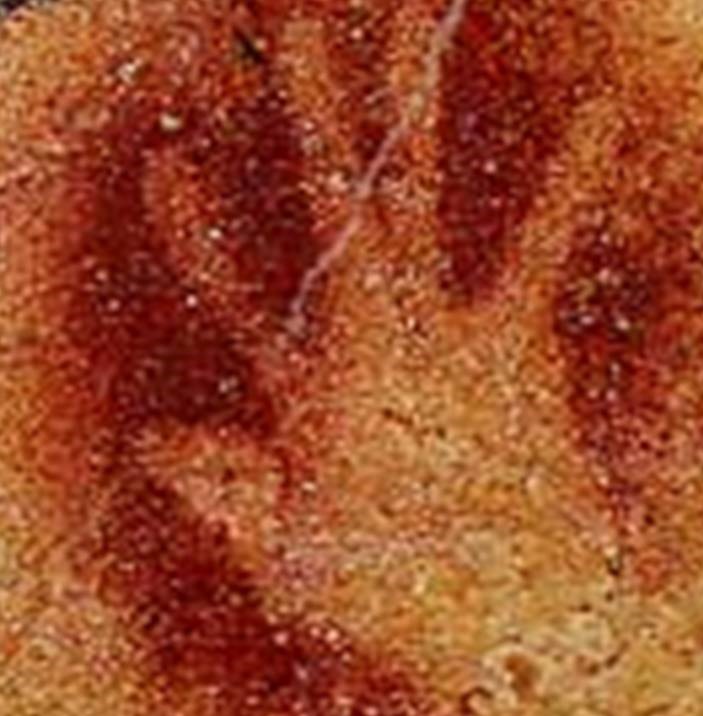
There are two hand prints above the back of the pig

Archaeologists have discovered the world’s oldest known animal cave painting in Indonesia – a wild pig – believed to be drawn 45,500 years ago.

Painted using dark red ochre pigment, the life-sized picture of the Sulawesi warty pig appears to be part of a narrative scene.

The picture was found in the Leang Tedongnge cave in a remote valley on the island of Sulawesi.

It provides the earliest evidence of human settlement of the region.

“The people who made it were fully modern, they were just like us, they had all of the capacity and the tools to do any painting that they liked,” said Maxime Aubert, the co-author of the report published in Science Advances journal.• Animal painting found in cave is 44,000 years old

A dating specialist, Mr Aubert had identified a calcite deposit that had formed on top of the painting, and used Uranium-series isotope dating to determine that the deposit was 45,500 years old.

IMAGE COPYRIGHTA.A. OKTAVIANA

image caption

There are countless limestone caves in the area – many still to be explored

This makes the artwork at least that old. “But it could be much older because the dating that we’re using only dates the calcite on top of it,” he added.

The report says that the painting, which measures 136cm by 54cm (53in by 21in), depicts a pig with horn-like facial warts characteristic of adult males of the species.

There are two hand prints above the back of the pig, which also appears to be facing two other pigs that are only partially preserved.

IMAGE COPYRIGHTA.A. OKTAVIANA

image caption
High contrast images: The two other warty pigs in the scene are only partially preserved

Co-author Adam Brumm said: “The pig appears to be observing a fight or social interaction between two other warty pigs.”

To make the hand prints, the artists would have had to place their hands on a surface before spitting pigment over it, the researchers said. The team hopes to be able to extract DNA samples from the residual saliva as well.

The painting may be the world’s oldest art depicting a figure, but it is not the oldest human-produced art.

In South Africa, a hashtag-like doodle created 73,000 years ago is believed to be the oldest known drawing.

media captionCave paintings as old as those found in Europe have been found in Indonesia, raising new questions about early mankind and the development of art in prehistoric times.

‘Stand by for more discoveries’

Jonathan Amos, Science Correspondent

Sulawesi is in a key location. It’s the largest island in a group that scientists often refer to as Wallacea after the great 19/20th Century naturalist Alfred Wallace.

The group sits on a dividing line, either side of which you find very different animals and plants.

But Wallacea’s significance also is that it must have been a stepping stone for modern humans as they made their way to Australia. We know they were on that landmass some 65,000 years ago, so it’s reasonable to assume they were also on Sulawesi at the same time or even earlier.

This raises the tantalising prospect of there being figurative art out there, either on Sulawesi or the immediate islands, that’s older still than 45,500 years old.

The limestone hills about an hour’s drive from Makassar have innumerable nooks and crannies, just like the cave at Leang Tedongnge.

Stand by for more discoveries.

IMAGE COPYRIGHTA.A. OKTAVIANA

image caption

The expectation is that even older paintings will be discovered

“Friends Matter” by Celia Berrell

Leave a comment

There once was a study that showed

if you want to stay healthy, grow old,

then have lots of friends,

right through to the end.

Giraffes do.  So now you’ve been told!

https://www.treehugger.com/giraffes-large-groups-friends-live-longer-5105065

Giraffes with Large Groups of “Friends” Live Longer

Female giraffes benefit from being social.

By 

Mary Jo DiLonardo

Published February 10, 2021 10:29AM EST

Adult female giraffes that live in large groups survive longer than animals that are more socially isolated, new research finds.1 Even though specific relationships might change, having several “friends” can help their life span.

Giraffe groups are interesting because they have what is known as “fission-fusion” dynamics, lead researcher Monica Bond of the Department of Evolutionary Biology and Environmental Studies of the University of Zurich, tells Treehugger. That means their groups will merge and split often throughout the day and memberships in groups also changes frequently. Similar systems also exist in many other hoofed animals, as well as whales, dolphins, and some primates.

“But within that fission-fusion system of daily merging and splitting, female giraffes maintain specific relationships (friendships) that are stable over years,” Bond says. “When we say relationships, we mean that they are seen grouping together frequently over time, so we think they regularly ‘check in’ and ‘hang out’ with each other, moving around and eating together and watching over their calves together.”

Bond and her team have been studying giraffes in the Tarangire region of Tanzania since 2012 with the goal, she says, of learning what helps and hurts them in order to conserve them for the future.

They learned to recognize giraffes by their unique spot patterns and observed them over time. Each time they saw a giraffe, they recorded which females were in the same group together. They used friendship patterns to determine each female giraffe’s level of sociability.

They also looked at other factors in the environment that are strongly correlated with the animals’ chances of surviving including the types of vegetation that surrounded them and their distance from human settlements.

They analyzed how all these factors influenced how long the animals lived and which were most important.

“We found that females that tended to be in groups with more other familiar females—which is called gregariousness—had better survival,” Bond says. “Moreover, their gregariousness was more important than vegetation and nearness to human settlements. So this is why we concluded that friends matter to giraffes.”

The results of their research were published in the journal the Proceedings of the Royal Society B.1

The Benefits of Friendship

Giraffe friendships appear to offer many benefits. Beyond poaching, the primary causes of mortality for adult female giraffes are usually disease, stress, or malnutrition. Being part of a group can help prevent these issues.

“We speculated that being less solitary, for example tending to group with at least three other females, benefits adult female giraffes by improving foraging efficiency, helping manage interspecific competition, protecting their calves from predators, and reducing disease risk and psychosocial stress,” Bond says. 

“They can cooperate in caring for their calves, avoiding harassment from males, and sharing information about food sources. All of this reduces their stress and improves their health.”

The results show that giraffes have similar social habits as humans and other primates, where having greater social connections offers more opportunities.1

“Humans and non-human primates like chimpanzees and gorillas also benefit from sociability, not by living in small, closed groups with just a few friends, but by being more socially connected within our larger community of associates,” Bond says.

“Having more social ties directly improves our health and longevity. This has been shown often in humans and primates but this is the first time we’ve shown this to also be true in giraffes. Understanding the importance of giraffe social relationships to their survival and fitness helps us to develop better conservation strategies that avoid disrupting those relationships, so giraffes and people can co-exist together.”

“Summer Rain” by Arna Radovich

Leave a comment

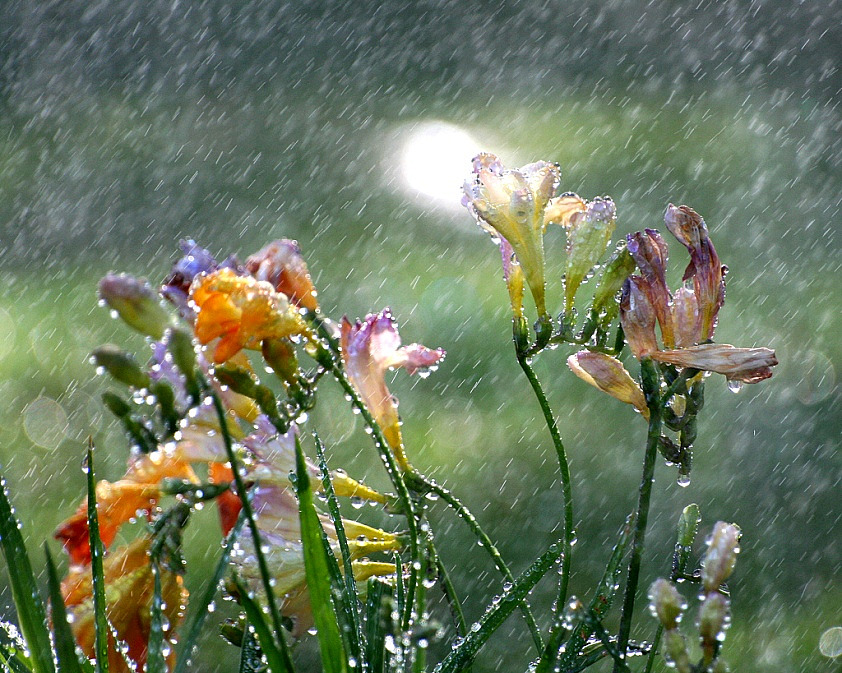
Summer wind whistling

Summer rain falling

Rainbow boots plunking in 

puddles of mud

Cobwebs of raindrops 

dangling from branches

Wriggly worms wiggling 

their way underground

Jewel coloured beetles

skittering and scuttling

while the snails in the 

vege patch are having a race. 

“Come inside, Jimmy,”

his mother is calling,

but Jimmy’s too busy

there is so much to see!