The phalarope is a small shorebird which belongs to the sandpiper family. They are known for their distinctive nesting behaviour, and their unique feeding technique. The males and females do not fulfil typical gender roles.
The Phalarope
Have you heard of the phalarope bird?
Now I give you my word ~ its name isn’t absurd.
In terms of physique it couldn’t be slimmer
Which helps to make it an excellent swimmer.
Their feathers are most often black, red and white,
Then they’re grey in the winter: what a wondrous sight.
Within the Arctic region they breed
Where you’d think it too cold to perform such a deed.
In the Northern Hemisphere they lay eggs, then later
Spend their winters the other side of the equator.
Female phalaropes will court with their mate
Who in turn builds a nest so he may incubate.
The she-bird is larger in size than her fella,
So if she gained weight, I doubt he would tell her.
But here’s a grand fact that I think is worth hearing:
It’s the male who does the young phalarope-rearing.
And so, as these verses are nearing their end
Please consider the phalarope your friend.
If ever you see one from the ground down below
Keep your eyes gazing skyward and call out “hello”.
The dodo bird was last sited in the mid 1600’s. It did not fly and lived fearless, wandering
In woodlands around the coast of Mauritius. The nicobar pigeon is its closest existing relative. Fruit is thought to have been part of the dodo bird’s diet. Interestingly the digestion of the bird was aided by the use of a gizzard stone. It existed carefree until becoming prey to invasive species and sailors.
From the Nicobar Islands, the Nicobar Pigeon,
Decided to travel – its one great ambition.
The trip was well planned – by no means capricious,
It would meet cousin dodo on the coast of Mauritius.
Superb fairy-wrens are also known as blue wrens, they live as a family group.
Fairy-wrens have weak powers of flight but have long legs and spend most of their time on the ground or in shrubs, progressing in a series of hops as they gather food.
In families of superb fairy-wrens it seems that fathers get all the good looks. The dazzling blue feathers on the breeding male’s head, neck and tail. Somewhere nearby will be a group of small brown birds. These are the females, and ‘stay at home’ children of previous broods.
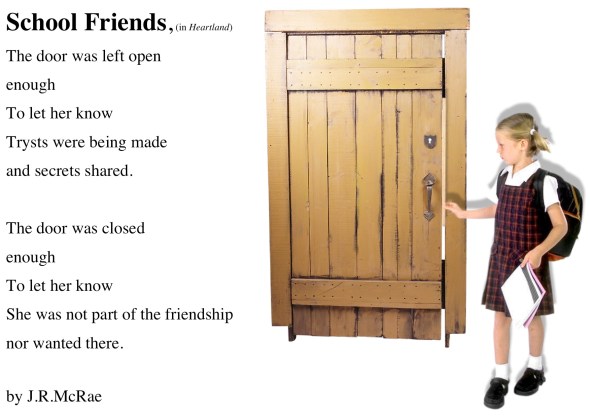
English: An innate object, ‘the door’ is used to express inclusion and exclusion, hands express a similar sense of isolation in “Novice” – compare.
Activity: Think of other innate/animate items that could be used to describe similar sentiments.
Study of society: Humans are tribal by nature – being part of an ‘I group’ or not defines who we are for most. It is a brave person who can stand aside from the group and be there own person regardless!
Activity:Think of people throughout history who have been truly ‘individual’.