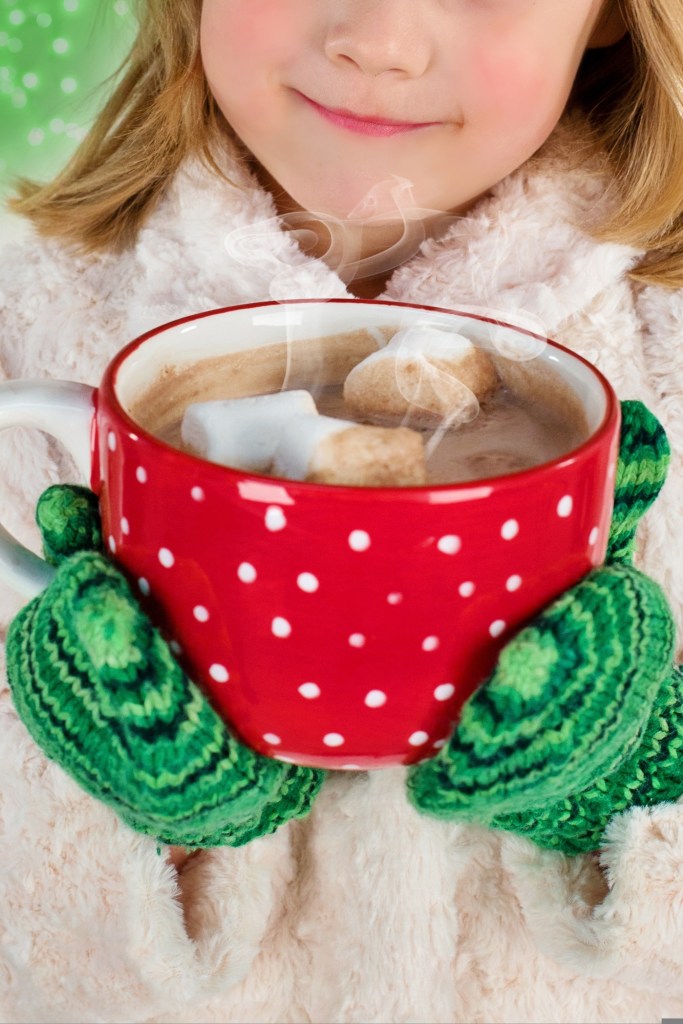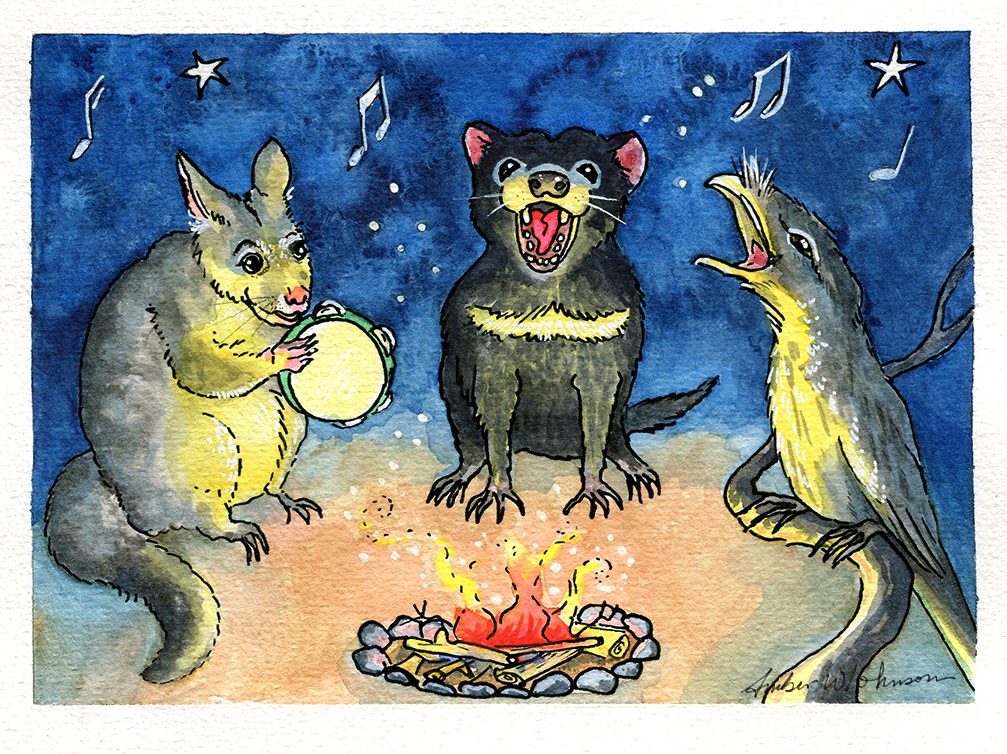
Winter in Australia is varied that’s true blue, From snowy mountain ranges to temps of thirty-two. Winter begins when the month of June has arrived. And the nights are usually cooler, no matter where you reside. Winter nights make clearer air, so the stars twinkle brighter While winter days are shorter and the sun appears calmer. Winter is great for drinking hot chocolate that is steaming And snuggling with blankets while reading and dreaming. Winter is a time for jackets, socks and beanies to be worn, And bonfires on the beach are a fun way to stay warm.
Choose a word and find out where it came from and what it means. Some words have changed their meaning; some have added new meanings as time has passed. Can you explain this word and its journey of uses and meanings in a poem?
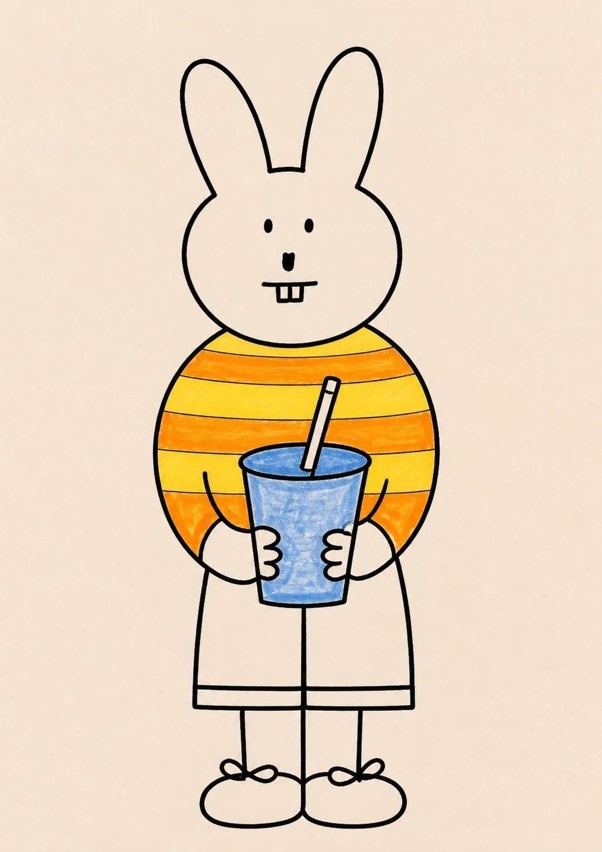
Image created by ChatGPT on reading The Gollywumpa poem
Nonsense with nonce
Introduction: Nonce words are nonsense words created for a specific situation, often in children’s poetry. In Lewis Carroll’s poem Jabberwocky, he invented the nonce words chortle and galumph, which are now in current use as part of the language. Perhaps the most famous nonce word — runcible — was created by Edward Lear for his poem The Owl and the Pussycat. There is no such thing as a runcible spoon. Lear loved the word so much he wrote about runcible hats, runcible cats and a runcible wall.
Invite students to invent their own nonce words and use them in poems or stories. They could also draw what they think their Gollywumpa looks like.
The Gollywumpa by James Aitchison
Here it comes, two heads and a nose, how it got them nobody knows.
Purple wings grow out of one ear, in the other a cabbage, so how can it hear?
Its favourite song is Bonglybooboo, the words of which it found in the zoo.
It doesn’t have feet, it runs on three wheels, and when it gets hungry it dines on eel meals.
It hates the winter, does the poor gollywumpa, so it puts on five hats and a thicketty jumper.
Underneath the Ficus Lives Mr Wiggle worm In the rich moist soil He can wiggle and squirm.
Wiggle worm Looked around It was cool and cozy Underground. There was much Work to do Churning earth To let air through. Enriching soil Whilst breaking down Organic matter In the ground. Mixing nutrients On his way Enriching earth With leaf decay. Wiggle worm Doesn’t have eyes Can sense light and dark With cells specialized. He doesn’t have lungs He doesn’t have legs He doesn’t have teeth
But he can produce eggs. Wiggle worm Is long and thin Needs to be moist To breath through his skin. He has five hearts He has no ears Birds, moles and beetles Are amongst his fears. Up to ten years His lifespan can be If he is housed In captivity. But in the wild I’m sorry to say It can be reduced If he becomes prey. Harsh weather can also Effect his lifespan If soil gets too cold Which it often can. Wiggle worm’s poop Is like liquid gold Full of nitrogen Often mixed and sold. He’s a natural recycler And works very hard Maintaining ecosystems In his backyard.
Mr Wiggle Worm Lives under my Ficus tree He hides from all above Trying to live and be free.