
Beneath The Forest Floor by Celia Berrell

1 Comment

Trees talk.
Conifers converse.
So do evergreens ever shut up?
Or do eucalypts evoke?

Do beech and birch trees
blather and babble?
Do pine trees
permanently prattle,
or tall trees
tittle-tattle?

Silently they do,
through fungal threads.

Moist underground,
a tangle of mycelium,
like mushroom wires,
like strands of chemistry,
sends messages,
warnings and nourishment.

From root to root.
From tree to tree
en-route connecting
their own internet community.

Photo from Pixabay

The Black Forest by James Aitchison

1 Comment

Why do they call it black,

when I think it looks all white?

Every tree, draped with snow,

and more will fall tonight!

Such a magic kingdom,

of lakes and towering peaks,

of deep, dark woods and valleys,

and babbling falls and creeks.

And in any village,

wood carvers work all day.

Listen to their cuckoo clocks,

hand-made the German way.

Teacher’s note:  The Black Forest (in German, Schwarzwald) is so-named because its fir forests are dark and mysterious.  It covers 6,000 square kilometres, its highest peaks soaring to 1,400 metres.  The Danube and Neckar Rivers have their source here.  Traditional skills include woodworking, crafting musical instruments and of course cuckoo clocks!

The Antarctic Beech by James Aitchison

Leave a comment

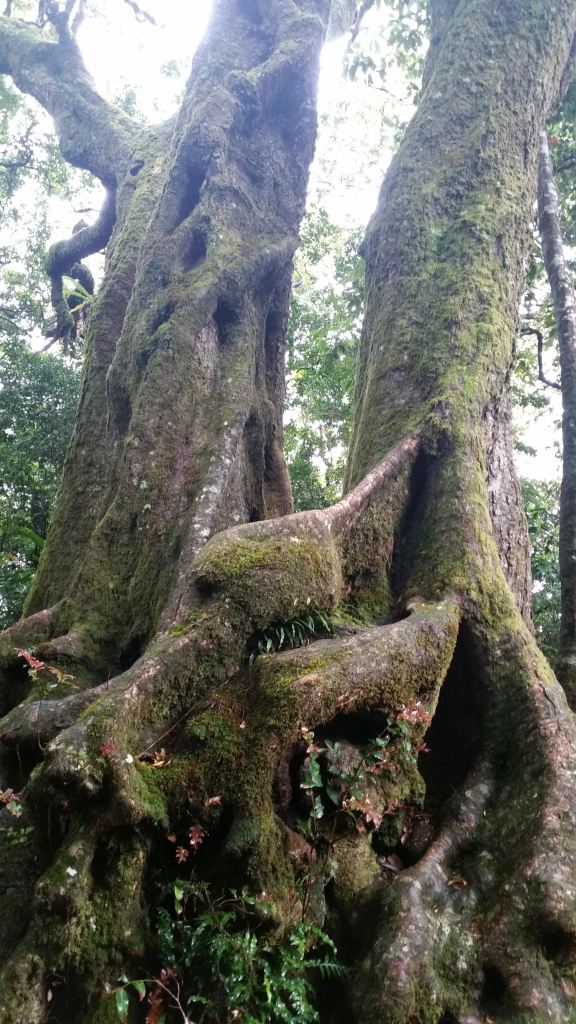
I wandered in a forest deep

and found this ancient tree.

Two thousand years it’s grown here;

lots more it well might see.

They said it’s called a Beech,

born in forests long ago,

before Antarctica 

had turned to ice and snow.

Teacher’s note: Lamington and Springbrook National Parks are located on the Scenic Rim of the Gold Coast hinterland.  Two hundred and twenty-five million years ago, the continents of South America, Africa, Australia and Antarctica, along with India, New Zealand, Madagascar and Arabia made up a single land mass called Gondwana.  When Gondwana broke up 120 million years ago, Australia remained attached to Antarctica. Seventy million years ago, when Antarctica was covered with rainforests, Australia separated and moved north. This Antarctic Beech has survived to this day. Sadly much of the ancient rainforest was lost to logging in the 19th Century.