
Everyone asks me
the same old question,
and it interferes
with my digestion.
How do I look
down in the mud?
The dam’s so cold
I can’t chew my cud.
So if you ask me
how I am now,
I’m a very grubby
hungry cow.

Everyone asks me
the same old question,
and it interferes
with my digestion.
How do I look
down in the mud?
The dam’s so cold
I can’t chew my cud.
So if you ask me
how I am now,
I’m a very grubby
hungry cow.
Now look here, Spider, I’m grateful to you,
For eating flies and cockroaches too.
But in my shower when it’s time for my bath –
That, I’m afraid, incurs my wrath.
With this broom, I’ll chase you out.
Please don’t jump or you’ll make me shout.
Stay very still while I get the brush,
Then into the toilet for one big flush.
Oh, poor little spider, what have I done?
I’ve gone and killed you. That’s not fun.
You didn’t deserve it, not one bit.
You should have hidden where my broom couldn’t fit.
Another spider? Does this make two?
Are you a brother? Oh no . . . it’s you!
I thought you drowned, but you’re still alive!
What’s your secret? How’d you survive?
Now you’re back, I am relieved.
No longer must I be aggrieved.
But please take heed, my leggy friend.
Don’t come too close – it will be your end.
Silent silo,
commerce fails,
no more trains,
rusting rails.
Rain and wind
sweep platforms clean,
railway ghosts
go unseen.

Teacher’s note: South Australia’s Burra railway station was a busy stop on the main line to Broken Hill and Perth.Passenger services ceased in December 1986, and the last grain trains operated in 1999. Volunteers have lovingly restored the station buildings.
In a Polish village,
opening to the sun,
I found all these flowers
when spring had well begun.
What a splash of colour,
I was lucky to be there,
where ancient wooden houses
huddled round the square.
One willie wagtail sang a sweet song,
he was joined by another
before very long.
Two willie wagtails built a snug nest
with feathers and flowers
and leaves softly pressed.
Three willie wagtails perched in a tree,
mummy and daddy
and baby makes three.
The temperature is rising
There’s music in the air
From birds singing loudly
Their mating calls do fair.
Bare trees now blossom
As bulbs come back to life
The sweet call of Spring
The drake looks for his wife.
Colours surrounds us
On breeze a sweet scent rides
It’s full of new beginnings
It’s Spring where hope resides.
Big Bird Emu cannot fly.
Got long legs and big brown eyes;
slender neck and smiley beak;
stringy feathers, mega feet.
Big Bird Emu sits on nest.
Eight whole weeks, no food no rest;
nearly faint from heat and thirst;
wants those chicks to hatch out first.
Shading babies, outstretched wings,
eating grass and insect things.
Eighteen months ‘til they’re full-grown,
big enough, safe on their own.
Big Bird Emu dedicated.
Caring love for little babies.
Get too close might make him mad,
‘cos he’s their Big Bird Emu DAD!
https://kids.britannica.com/kids/article/emu/390741
https://www.bushheritage.org.au/species/emu
I have a hidden house
in a garden full of flowers,
and I love to sit in silence
and gaze at it for hours.
The little house was built
in the Gold Rush so I’m told,
but for me it is a treasure
worth more than any gold.

It would be nice to be a snail,
Carry my house upon my back
And leave a silver trail,
Never needing to unpack.
Out for dinner every day
No kitchen in my house
‘Cause it’s very small inside
Can’t even fit a mouse.
I’d always be close to home
Never far away
And my house I’d fully own
No mortgages to pay.
Cleaning would be a dream
Over in a blink
Giving me much more time
To play and even think.
It would be nice to be a snail
Carry my house upon my back
Never be far from home
And safe when the sky is black.
I wandered in a forest deep
and found this ancient tree.
Two thousand years it’s grown here;
lots more it well might see.
They said it’s called a Beech,
born in forests long ago,
before Antarctica
had turned to ice and snow.
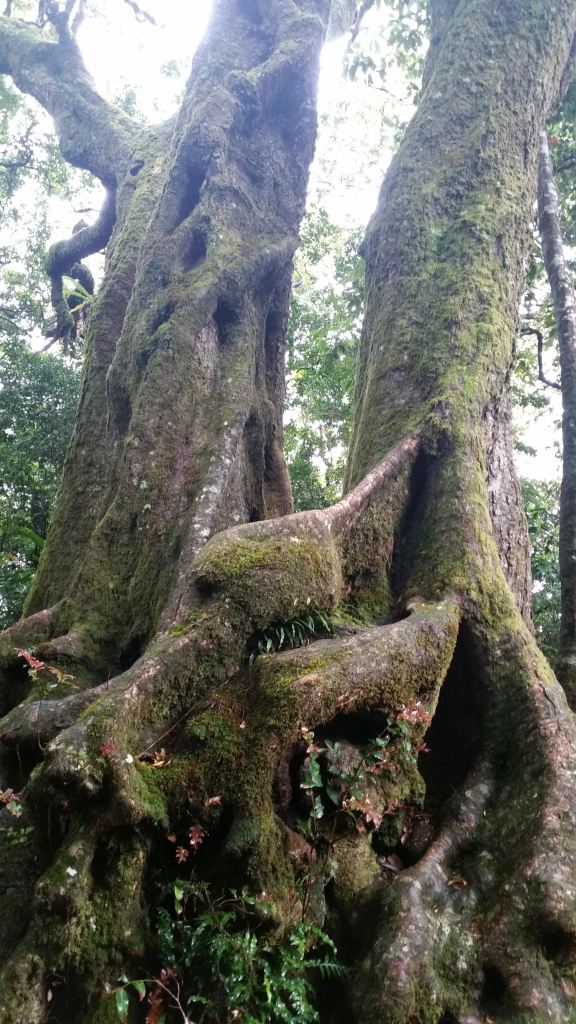
Teacher’s note: Lamington and Springbrook National Parks are located on the Scenic Rim of the Gold Coast hinterland. Two hundred and twenty-five million years ago, the continents of South America, Africa, Australia and Antarctica, along with India, New Zealand, Madagascar and Arabia made up a single land mass called Gondwana. When Gondwana broke up 120 million years ago, Australia remained attached to Antarctica. Seventy million years ago, when Antarctica was covered with rainforests, Australia separated and moved north. This Antarctic Beech has survived to this day. Sadly much of the ancient rainforest was lost to logging in the 19th Century.
 Australian Children’s Poetry