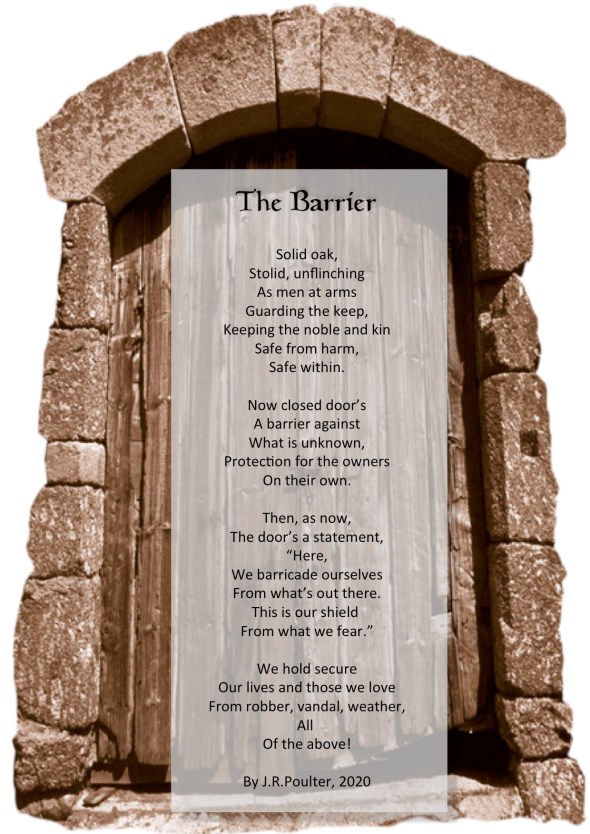
“The Barrier” by J.R. Poulter

Leave a comment


“By the Fire” by J.R. Poulter

Leave a comment

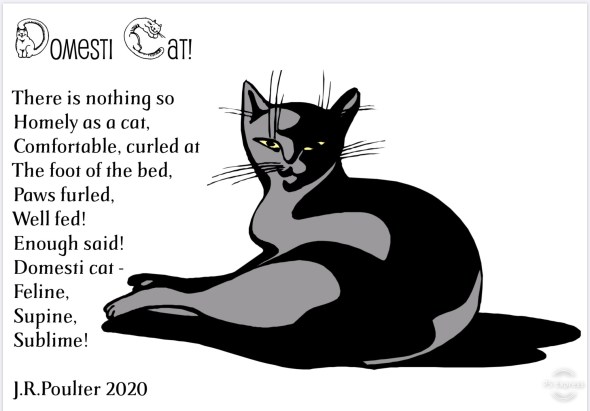
“Domesti Cat” by J.R. Poulter

Leave a comment


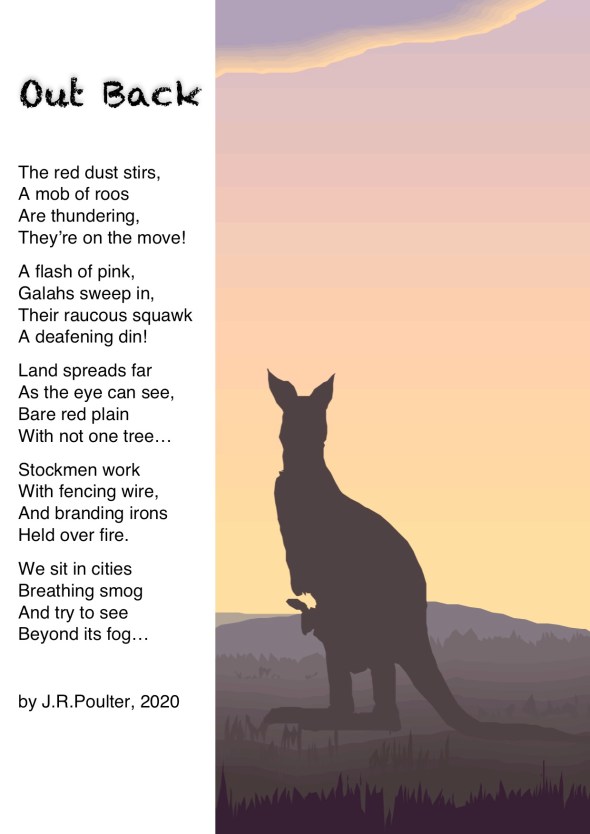
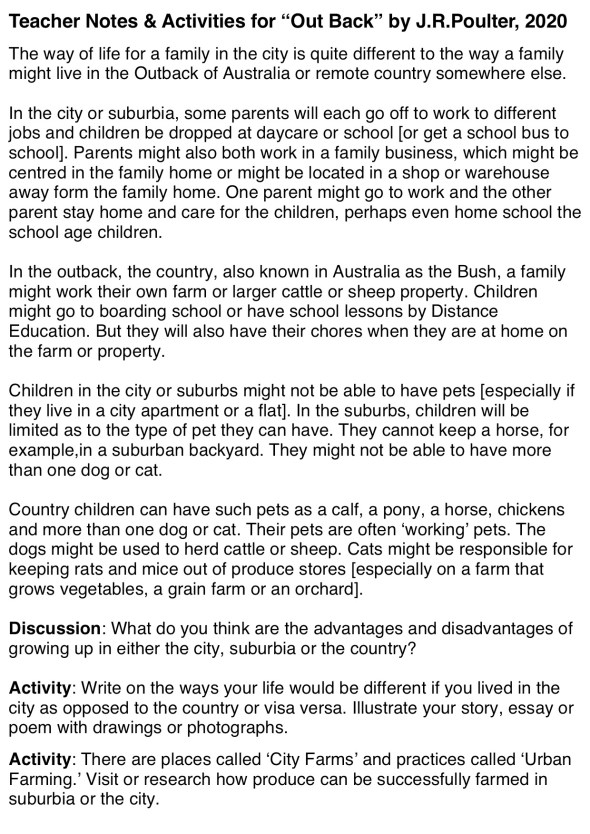
“Outback” by J.R. Poulter

Leave a comment

“Clean Hands” by J. R. Poulter

Leave a comment


“The Trendy Regaliceratops”  by Celia Berrell

Leave a comment

The Trendy Regaliceratops 

This leafy-loving herbivore

weighed a hefty ton or more.

Six metres long and bulky strong,

this dinosaur, we got so wrong!


His bony frill’s not meant as armour.

More, a snazzy lady-charmer!

Pretty as a peacock’s tail

in battle, it would surely fail.


Those horns above his nose and eyes

are such a trendy cute surprise.

Too flimsy for a fight to start

his fancy horns are body art!


A cousin of Triceratops

with colourful Canadian chops,

perhaps he was polite and coy

although he looked more like HELLBOY!

Celia Berrell

http://www.the-scientist.com/?articles.view/articleNo/43191/title/Spiky-Headed-Dino-Discovered/

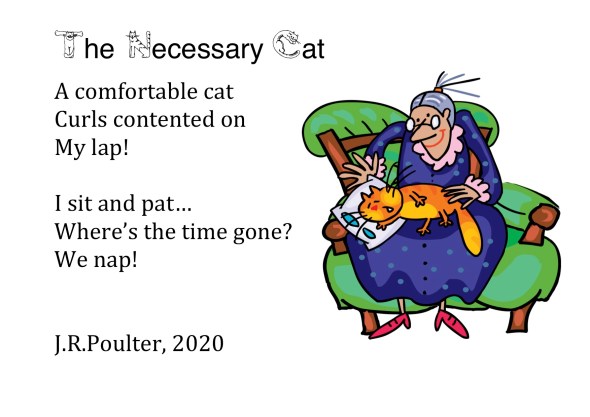
“The Necessary Cat” by J. R. Poulter

Leave a comment


“Baby Eucalypts” with Teacher Notes  by Celia Berrell

Leave a comment

Baby Eucalypts


When fire has passed,

eucalypts are reborn.

Tough woody capsules

release their seeds,

falling on ash

which is nutrient-rich.

Plunging their roots

into first-rained earth,

their view of the Sun

helps speed that growth,

for the canopy’s shade

is burnt and gone.


Animals fled.

So new leaves, uneaten,

make a dash

towards the sky.

No insects in sight

means delicate shoots

don’t get sucked dry

of their life-giving juice.

Alone in the quiet

on black-rich soil,

those baby trees have

the best start in life.


http://www.forest-education.com/wp-content/uploads/2017/07/eucalypt_adaptations.pdf

Fire has been a constant visitor to Tasmanian forests for millions of years. It has shaped the evolution of many plant species and communities. In fact, many species are not only adapted to fire, but actually have features that help to promote it. Fire is an essential part of the life cycle of many plant communities, including dry eucalypt forests and wet eucalypt forests. Fire behaves differently, however, in each of these systems. A key difference between eucalypts and rainforest trees is that eucalypts are adapted to, and take advantage of major, widespread disturbances of the forest canopy, especially those caused by fire. Individual trees of different species can withstand the effects of fire to varying degrees, but all eucalypt forest types depend on it to some extent for regeneration. Eucalypt seed release is triggered by fire, when tough, woody capsules empty their contents onto a nutrient-rich ash seedbed from which all the understorey competition for light, water and nutrients has been removed. Browsing animals are driven out for a time, and the heat-treatment of soil reduces the numbers of plant-eating insects and soil organisms during the short but crucial early growth period.

“Lacey” with Teacher Notes by J.R.Poulter

Leave a comment


Click link below

Lacey_with Teacher Notes & Activities_JRPoulter,2020


“Giving” by J. R. Poulter

Leave a comment