The Night Sky by Celia Berrell

Leave a comment

Find yourself a place where there’s
no artificial light,
after sunset’s peachy glows
have dwindled into night.

Feast your eyes on darkness
so, your pupils will enlarge,
taking-in night’s wonderment.
A myriad of stars!

Awesome, spacious,
trancing, spinning,
mesmerising lights are bringing
messages of time’s beginning.
Histories of cosmic meaning.

It makes us question why we are,
compared to just one single star.

The more we look,
the more we see
the endlessness.
Infinity.

Image from Pixaby by Nini Kvaratskhelia

Heavenly Jingle Bells by Celia Berrell

Leave a comment

Horses trotting happily while
pulling on a cutter sleigh
was quite a common sight to see
in winter’s north-west USA.

This was the eighteen-fifties, when
Pierpont made his catchy song.
Created for Thanksgiving, then
it stayed ‘til Christmas came along.

New gramophone technology
soon spread this song across the seas.
Now JINGLE BELLS stars frequently
in winter-time festivities.

Two astronauts on Gemini Six,
December nineteen-sixty-five,
with sleigh bells and harmonica
performed this song in space – yes LIVE!

https://www.britannica.com/one-good-fact/what-was-the-first-song-played-in-space

Image from the book CHRISTMASTIME RHYMES

The Raman Effect by Celia Berrell

Leave a comment

(Chandrasekhara Venkarta Raman was born 7 th November 1888)

Chandrasekhara
Raman’s a knight
and Nobel prize-winner
for physics in light.
A new radiation
he came to detect.
A scatter of rays
named “The Raman Effect”.

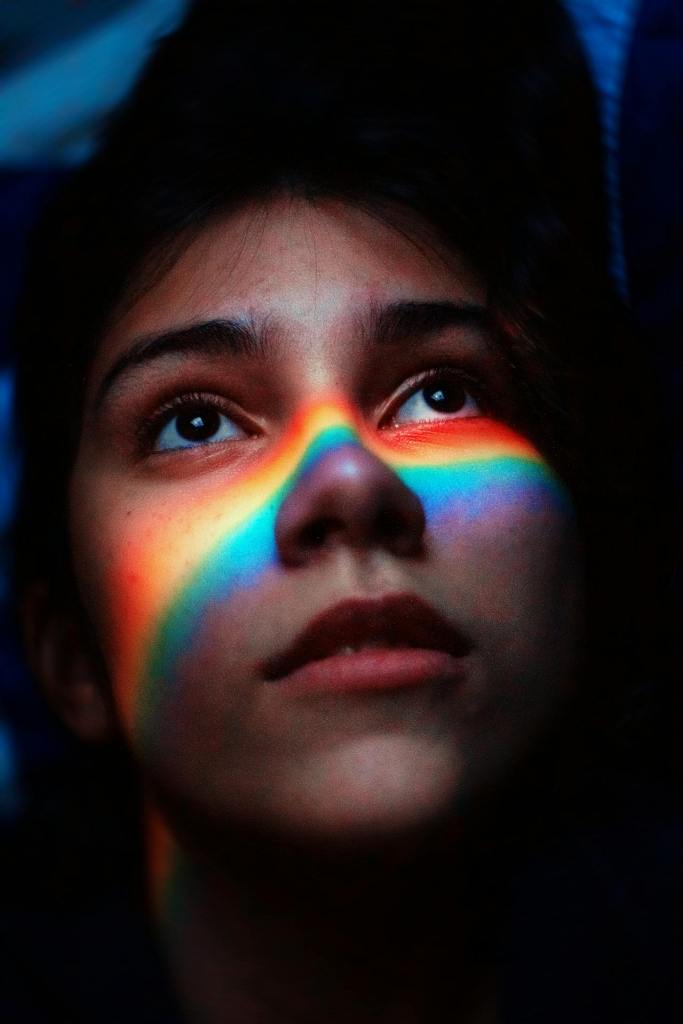
This change in light’s wavelength
when passing-on through
a gas or some substance
in spectroscope view,
reveals the ID
of its chemistry zoo.
A tool to make
scientist’s dreams come true!

Doing no damage
discerning gem quality;
checking a pill for
content and purity.
Uses: amazingly
varied and rife.
Such as scanning remotely
for Mars signs of life.

For Teachers: The Nobel Prize in Physics 1930 was awarded to Sir Chandrasekhara Venkata Raman “for his work on the scattering of light and for the discovery of the effect named after him” https://www.nobelprize.org/nobel_prizes/physics/laureates/1930/

Photo from Pexels by Barcelos_fotos

Poisoned Potions by Celia Berrell

Leave a comment

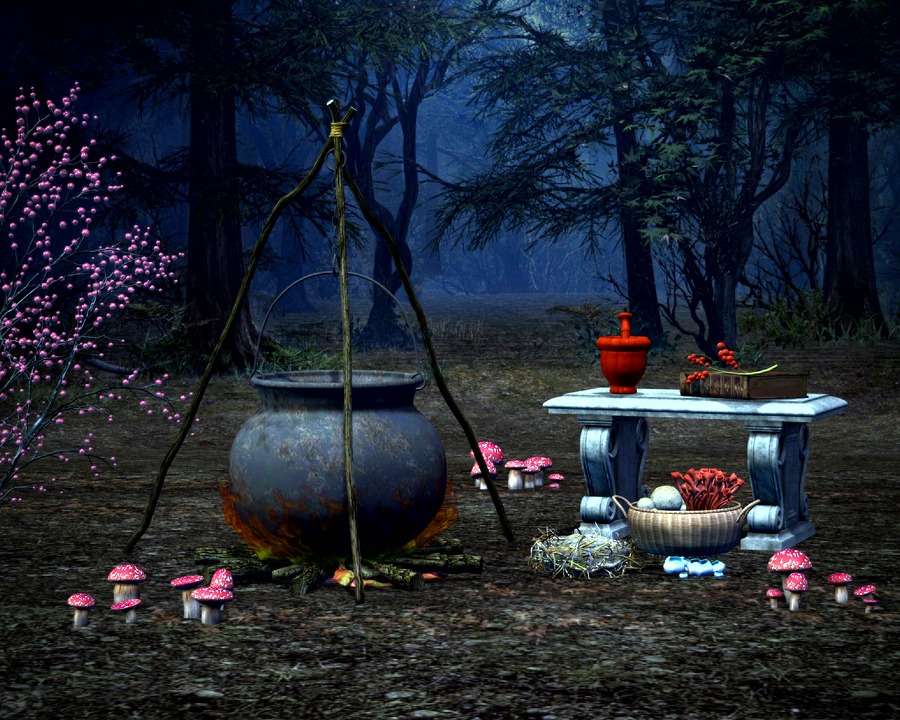
“Double, double,
toil and trouble …”
Shakespear knew
a couple of subtle
things about his
Macbeth witches,
which is that
their cauldron-brew
contained some magic –
which is true!

Toxic plants made
poisoned potions,
twisting minds to
changed perceptions,
making witches
laugh and scream
as though they’re flying
in a dream.

Perhaps some died
from such a mix,
while others mended
from these tricks.
And those that lived
have paved the way
for cancer drugs
we use today.

Photo from Pixabay

Spring Is A Thing by Celia Berrell

Leave a comment

Spring is a thing,
a seasonal symphony.
Singing its songs within nature’s fine harmony.

Plants grow new buds, putting leaves on display.
Birds return home from warm winter holidays.
Insects emerge from their dark hibernation.
There’s feeding and breeding and plant propagation!

Plants take their cues
from the air’s warmer ways,
while birds are called home by the length of the days.

Cold snaps confuse some key pollinators.
Should they wake up or remain hibernators?
Come out too early, no food will have grown.
Come out too late and their flowers have gone.

Spring is a thing.
A seasonal symphony.
Dancing with daylight and climate’s warm mystery.

Photo from Pixabay

Life With LUCA by Celia Berrell

Leave a comment

LUCA is the Last Universal Common Ancestor

We don’t know how it started:
this awesome life on Earth.
Were muddy ponds or thermal vents
the source of all our births?

Life is so incredible
and beautiful as well.
Growing many Earthly forms
from LUCA’s lovely cell.

And when our Earth eventually dies
engulfed by ageing Sun,
five billion years or so from now,
will ALL of life be gone?

Or should we plan a rocket-launch
of microbes to the stars
and set life’s cycle off again
on planets wide and far?

Image from Pixabay

Water Droplets by Celia Berrell

Leave a comment

Where liquid water meets the air
it has a surface tension.
An outer layer of molecules
that all have strong attraction.

Water droplets round in shape
like beads will often form,
hanging on a cobweb’s threads
like jewels in the dawn.

And on a pond small insects simply
walk along its top.
Their tiny feet don’t break that layer.
Along the top they hop.

A raindrop on a window-pane
will slide towards the ground
as water is a fluid that
can easily move round.

It leaves behind a trailing tail
as it goes trickling past
because that surface tension makes
it stick upon the glass.

I like to pick out two big drops
and guess their moving pace
to see which one will trickle first
and win the window race.

Poem from The Science Rhymes Book. Illustration by Amy Sheehan

Zap, Crackle – Stop! by Celia Berrell

Leave a comment

It sounds like a cracker
each time a bug-zapper
electrocutes one of those insects.
To protect our meat pies
from pic-nicking flies,
that zapper is nowhere near perfect.

It’s a haphazard thug
killing mostly good bugs
important for plant pollination
plus millions of beetles
who never harm people.
It’s rather a sad situation.

Their UV light glow
won’t attract mosquitoes.
It’s CO2 breath mozzies seek.
So this gadget’s NO-GO
and, for those in the know,
it’s best to use bug spray with DEET.

Image compiled by Celia Berrell & Pixabay

Bunny Diet Drops by Celia Berrell

Leave a comment

A Dragon’s Groovy Trick by Celia Berrell

Leave a comment

A Thorny Dragon’s
crazy coat
has scary spikes
and grooves of note.
This makes him look
quite weird and cute.
And acts as lizard’s
drinking suit!

Capillary action is a way
that water moves
through narrow grooves.
Its surface tension
climbs and clings.
Especially to narrow things.

To get a drink
our lizard stands
beneath wet plants
or soggy sand.
The water finds
his groovy skin
then moves to mouth
and trickles-in.

Watch this National Geographic video to learn more about this amazing creature