The river flowed With milk and cream Washed over me I swam upstream. Samson was there My trusty dog Swimming beside me In a thick fog. I couldn’t make out What lay ahead Just trepidation and A little dread. Out of the shadows I spotted a bird It spoke English Which was quite absurd It directed us to What appeared to be An alien vessel With free entry. Samson and I Were a little confused But at the same time A little amused. We walked up a ramp Slimy and white And there before us An unusual sight.
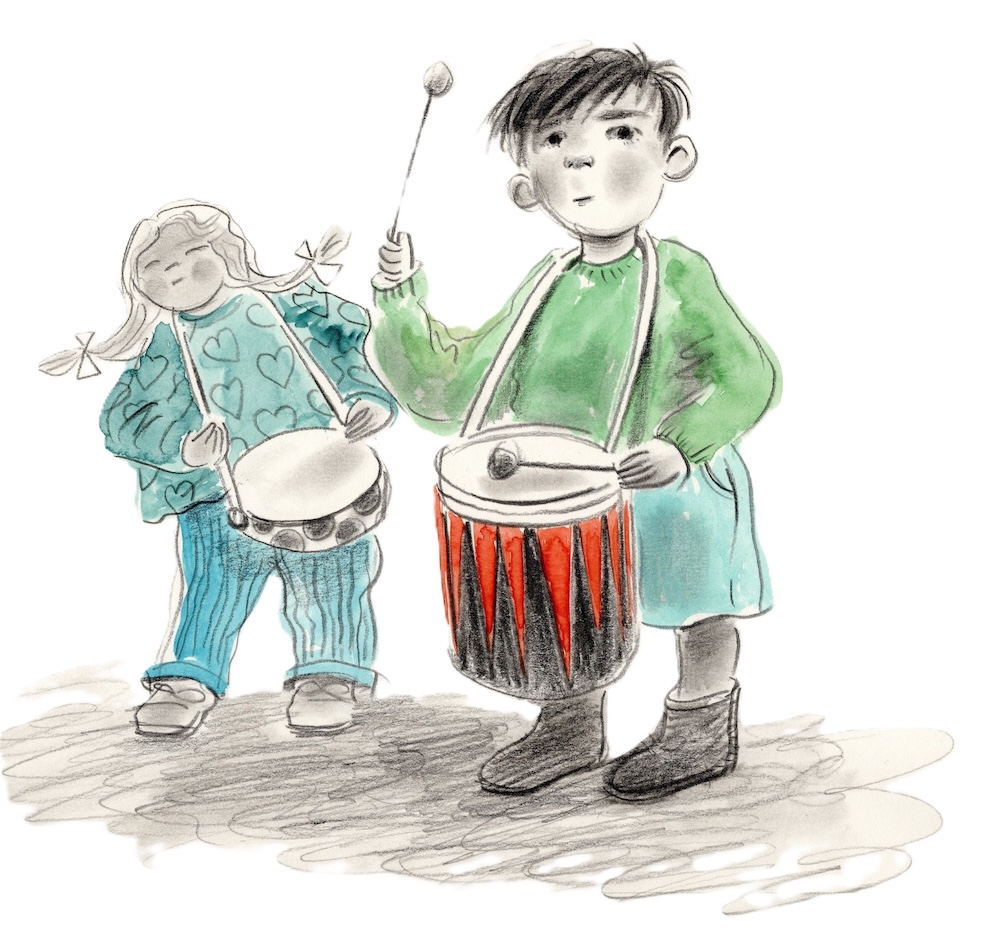
Mice on a wheel Going round and round Keeping time with An annoying sound. It was loud and sharp And hurt my head I opened my eyes I was in bed.
Was it a nightmare Or was it a dream Or an alternate world Of milk and cream?
Now make yourselves comfy with cushions or couch….. I have secrets to tell you about the pouch. But try to sit straight, please do not slouch ‘cause that would turn me into a grouch. Now let me find a good place to crouch, Then truth I will tell you – for that I’ll vouch.
How many creatures, would you guess at or think Have pouches in which their young can drink? We’ll only count those in our country because Their number is huge, even just here in Oz. Kinds of marsupials who live here and thrive Add up to one hundred and forty-five!
Most of their pouches will open at front A few open backwards – how’s that for a stunt? Do they slide into pouch down over the belly? Or poised on the ground – jump into the valley? One thing’s for certain, however they enter From back or from front, they aim for the centre.
Why, then, do some pouches face towards tail? …. to protect their young from rain and hail? No! for food or shelter mum has to dig earth, Which means all the soil would be aimed at the girth; If her pouch were to open towards the trees It would fill up with earth and joey would sneeze!
Now which of our friends their tummies will comb To keep a neat front on a back-facing home? Wombats and bilbies, Tassie devils and quolls, Plus bandicoots, koalas and marsupial moles. I think that I’ve named each motherly digger If I’ve missed someone off – the list will be bigger.
Marsupials live widely, except in the sea, Some live on the ground and some in a tree; Your wombats will burrow (they like to stay snug) Where it’s better for snaffling a juicy bug. The wee pygmy possum who lives above snow High in the Alps, his family will grow.
Most of our roos live in desert and scrub And only when grazing will they form a club. They’re not very chummy or prone to join gangs They keep to themselves and avoid boomerangs. They don’t elect leaders to steer them through strife, They don’t even bond with a regular wife.
Some say that this lack of common society Is the cause of the roo’s constant sobriety. Too hot to find food in the heat of the day, They rest till it’s time to hunt and make hay. At dusk they prepare to take the night air, Then go out to find food, perchance to pair.
Do all the marsupials enjoy the same food? That depends on the kind of marsupial brood! Kangas, koalas and wombats eat plants, Depending on what their locality grants. Bandicoots and possums eat whatever’s in sight, Meat, plant or insect – if they’re hungry, they’ll bite.
The Tasmanian Devil will eat only meat He’s a cute little fellow but slow on his feet. Thirteen k’s per hour is not very quick But he gets enough food for his lips to lick. Other marsupials eat insects and gnats And try to avoid confrontations with cats.
Herbivores, omnivores, carnivores, too Insectivores also you’ll find in the Zoo. Marsupials too have a trick with their teeth There’s no second set there in the gums, beneath – This wonderful mammal keeps the first forever To chew, chomp and nibble – that’s ever so clever.
From whence came they here? Arriving which year? We can only share with you what we can hear. Word is that this species (and few are finer) Came from afar – it’s thought to be China! And the time they arrived will give you a shock Fifty million in years, says Nature’s clock!
That long ago? What was their route? They came as they were, not one wore a suit! They moved out from the East and arrived in the West, Via the Americas, not wanting to rest; Through the Antarctic snows they continued their quest To the land of Australia, the place they love best.
Let’s create a kinder world One where love, doesn’t need to be earned. Where smiling, helping, joy and laughter Are things all of us chase after.
Offer to make Grandad a cup of tea. He might be feeling quite lonely. Your presence will bring love to his day And improve his mood as he watches you play.
How about a smile for someone new? You just don’t know what they’re going through. Your kindness may fade their worries away, And give them hope to enjoy their day.
What about picking your mum a flower? To show her kindness has special power. She’ll look at you with adoration in her eyes. You’ll both be better off – you will realise.
It’s quite easy really to show compassion and be kind. I believe it’s the way that we’ve been designed. So have a go at finding a creative way, To show someone kindness on your travels today.
Red poppies remind me of: A painting by Vincent van Gogh, A holiday postcard sent to me by a friend traveling near France, A two dollar coin, A warm sunny day in November.
Red poppies remind me of: Stopping suddenly and being silent for one minute mid shop, Then continuing on like nothing happened.
Red poppies remind me of: Stories that I’ve heard of war, Fighting that I never saw, Soldiers’ names engraved in stone In the centre of most towns I’ve known.
Red poppies grow Where soldiers, long ago, stopped, suddenly; Silent, forever. Red poppies remind me of them.
Teacher’s note: By the time the First World War ended, at the eleventh hour of the eleventh day of the eleventh month 1918, a miracle had occurred. In the devastated fields of Flanders, the scene of horrific carnage, red poppies bloomed again. That is why the red poppy is the symbol of Remembrance Day.
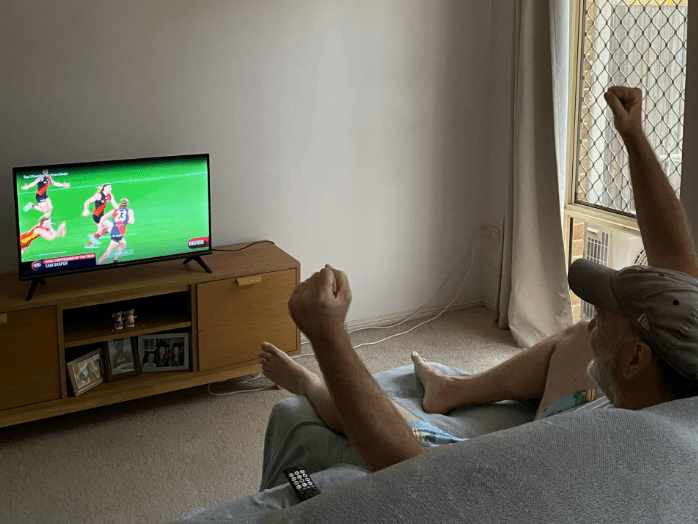
What’s your hot tip? Its Melbourne Cup day today. The race that stops the nation is about to get underway.
The jockeys are ready with their colours on display. But it’s the horses, who are the stars of the day. With chestnuts so shiny and blacks with a blaze; Bays with white socks and large dapple greys. Thoroughbreds prancing and biting at the bit; Waiting at the barriers looking mighty and super-fit.
Suddenly the crowd becomes quiet. The barriers open and horses jump out. The fans in the stands are now screaming And each one is secretly dreaming That their horse will be the winner So they can boast at tonight’s dinner.
There’s three thousand, two hundred metres to go. Which horse will speed up and put on a show. They’re bunched tight ‘round the track So there’s no looking back. Hooves sounding like thunder As we all gaze in wonder. Which horse will take the lead And become today’s famous steed.
They’re on the home stretch and some horses are tiring. Nostrils are flaring and tails wildly flying. But look at number twenty-two He’s found a gap and galloped through. The jockey riding knows what to do. He leans forward letting the gelding have his head. As he crosses the line, one whole length ahead.
The crowd is roaring and emotions are soaring. But the star of the day is the large dapple grey. He knows he’s done well and was happy to play. Now all sweaty, he lets out a snort and a neigh And looks forward to pats and some extra hay.
(Chandrasekhara Venkarta Raman was born 7 th November 1888)
Chandrasekhara Raman’s a knight and Nobel prize-winner for physics in light. A new radiation he came to detect. A scatter of rays named “The Raman Effect”.
This change in light’s wavelength when passing-on through a gas or some substance in spectroscope view, reveals the ID of its chemistry zoo. A tool to make scientist’s dreams come true!
Doing no damage discerning gem quality; checking a pill for content and purity. Uses: amazingly varied and rife. Such as scanning remotely for Mars signs of life.