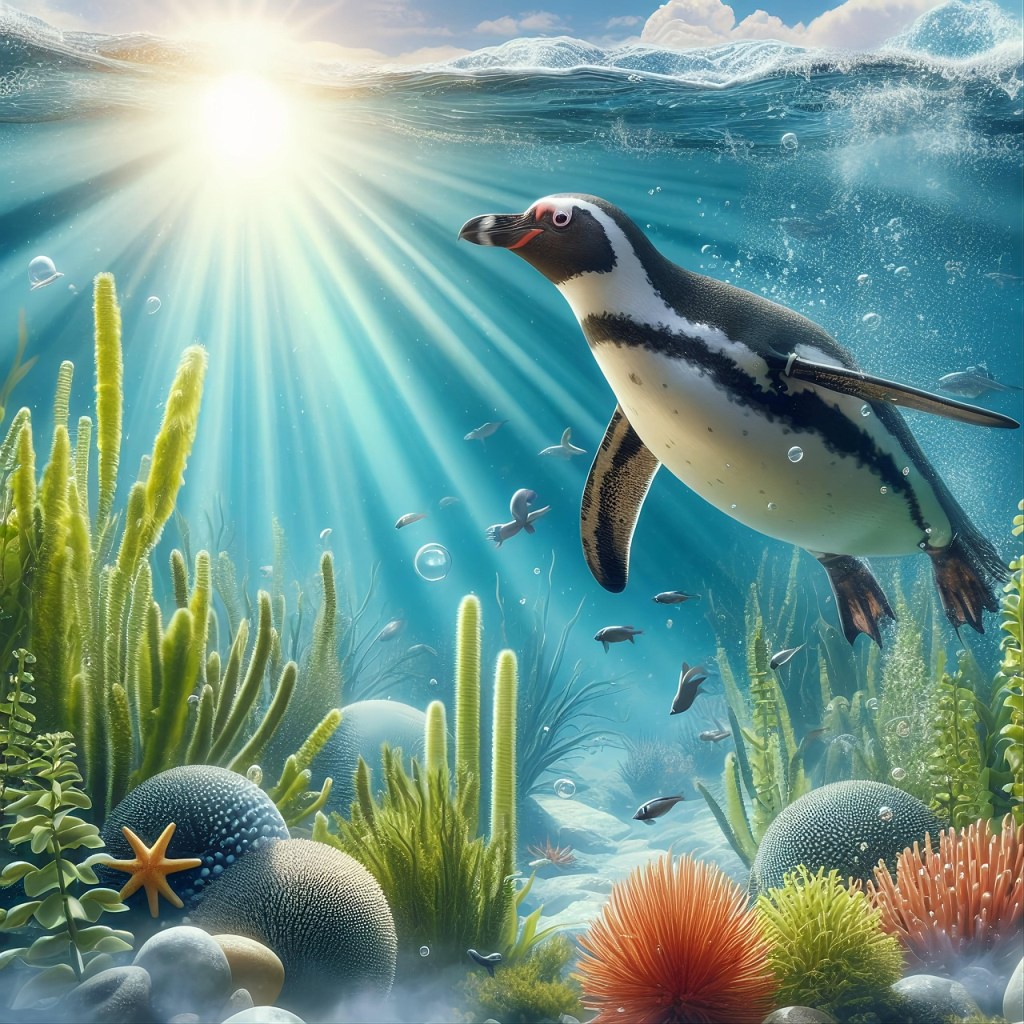

Why We Love Penguins by Celia Berrell

Leave a comment

Sleep Well  by Celia Berrell

Leave a comment

Eight hours, eight hours of sleep is best

to keep us healthy. Give us rest.

Eight hours brings opportunities

to strengthen our immunities.

To fight off winter’s colds and ‘flu.

Protecting us from cancer too.

For young and old; both short and lanky

lack of sleep can make us cranky.

Take away that eight-hour chunk

and brains act like they’re getting drunk!

Eight hours, eight hours of sleep a day

helps keep us well, live long and play.

Image from Pixabay

December Prompt and Farewell

3 Comments

LOTS to celebrate in December! Hanukkah, Kwanzaa, Christmas, St. Nicholas Day, Bodhi Day, Las Posadas and of course the summer/winter solstice. Wherever you and whatever you celebrate let us know by sending in your poems to ozchildrenspoetry@gmail.com.

Please note the website will not be checked regularly over the Christmas/New Year period but will start up again around January 10th.

And this will be my final post before handing over the reigns to the very capable hands of Linda Davidson and Celia Berrell. Both have been staunch supporters of ACP and have contributed some wonderful poetry to the site.

Thank you to everyone who has posted, liked or subscribed over the past two years! Keep your wonderful poems coming in 2026 and beyond. Have a safe and happy holiday season.

Photo from Pexels by Susanne Jutzeler, suju-foto

What’s A Saw For? by Celia Berrell

Leave a comment

A Sawfish has a flattened jaw
which points its mouth towards the floor.
That saw-like snout we can’t ignore –
but what’s that awesome saw-snout for?

A Sawfish wouldn’t roar or snore,
but could it use that saw to gore
or dig and poke prey near the floor,
could that be what that saw-snout’s for?

A Sawfish snout has scores and scores
of electronic sensing pores
detecting fish-food no-one saw
when water’s muddied more and more.

So now we know that saw’s contour
is something Sawfish will adore.
It helps them catch small fish galore.
And that’s what Sawfish snouts are for.

Photo from Pexels by Shuxuan Cao

October 4th is Sawfish Day. Sawfish numbers are sadly declining. Nowadays, sawfish are only reliably found near Florida USA and around northern Australia. Sawfish, like their shark relatives have a skeleton made of cartilage rather than bone. Question: how can you tell the difference between a sawfish and a sawshark? Answer: by looking at its gills. Sawfish gills are underneath their body, next to its mouth, while a sawshark’s gills are found on the side of its head.

Can Plants Remember Things? by Celia Berrell

Leave a comment

Plants have no brains
but scientists find
that trees seem to think
and weeds change their mind!

Mimosa we know as a
sensitive weed.
It folds up its leaves
when a threat is perceived.

Repeatedly dropped
on a soft mat of foam
Mimosa stops folding
as foam does no harm.

Days and weeks later
no folding leaves shows
when dropped on soft foam
Mimosa still knows!

Image by Leopictures from Pixabay

Brilliantly Dotty! by Celia Berrell

Leave a comment

Quantum just means very small.
A quantity so tiny,
electrons in its atoms will
behave constrained and tidy.

Quantum Dots are very small.
They’re nano-sized or less.
When energized by radiant light,
they vividly fluoresce.

Many modern TV screens
now use such Quantum Dots,
creating glowing hues for scenes
from brightly coloured spots.

Carbon Dots fluoresce in red.
If silkworms on those dots are fed,
they’ll glow in daylight – not in red …
their skin and silk glow PINK instead!

First published in Double Helix #70 magazine by CSIRO Publishing.

Image from Pixabay

Man Made Diary by Celia Berrell

Leave a comment

When did we start
having so much stuff?
To go without
would be cold and tough.

Two-and-a-half
million years ago
a few stone tools
was all we could show.

Three hundred thousand
years before now
we’d arrows and spears
and fire knowhow.

By seventy thousand
an Ice Age had stressed
those poor chilly humans
and made them get dressed!

Image from Pixabay

The Mysterious Marriage of Spacetime by Celia Berrell

Leave a comment

Time’s a kind of mystery,
not made of anything.
We treat it like a measurement.
A time-line piece of string.

But NOW-time can be different,
depending where things are.
We look back over many years
when gazing at a star.

The speed time passes, tick & tock
depends on where things go.
If gravity’s extremely strong
that tick & tock go slow.

Since Einstein showed us Spacetime,
THEN & THERE were surely wed.
And WHEN & WHERE got married too …
and share a Spacetime bed!

Image by dlsd cgl from Pixabay

The Desert Party by Celia Berrell

1 Comment

It hardly rains
but when it pours
on sleepy desert ground
the speedy changes
to the land
will certainly astound.

A dried-up creek
now overflows
expanding to a lake.
And dormant life-forms
eggs and seeds
immediately awake.

The dry red dirt
transforms into
a carpet made of flowers.
And tiny creatures
start to hatch
within a few short hours.

With decorations
all in place
the waterbirds arrive.
Providing
lots of music.
Now the party’s come alive!

First Published in CSIRO’s Scientriffic #66 2009

Image by G.C. from Pixabay

Leave a comment

Poems for

National Science

Week 2025

SCIENCE RHYMES, hosted by Celia Berrell, are seeking your rhyming science poetry about SOMETHING SMALLER THAN YOU to feature in the SCIENCE RHYMES ITTYVERSE blog this August to celebrate National Science Week.  The free PDF called SMALL TINY NANO is available through this Science Week Competition Event and on the Science Rhymes / National Science Week page to help with some ideas.  

Please email your submissions by Monday 28th July to: feedback@sciencerhymes.com.au.  We prefer poems of 1 to 4 verses that rhyme.  Children are especially encouraged to participate: just make sure you correspond via an adult’s email address so we can reply.  Poems authored by children will be acknowledged by first name only (with School name, or town and State where applicable).  Anyone using ChatGPT to create poems: please acknowledge ChatGPT or AI equivalent as co-author of your submission.

Thank you to all ACP poets who participate in these annual Science Rhymes / Science Week projects!
Best Wishes,
Celia