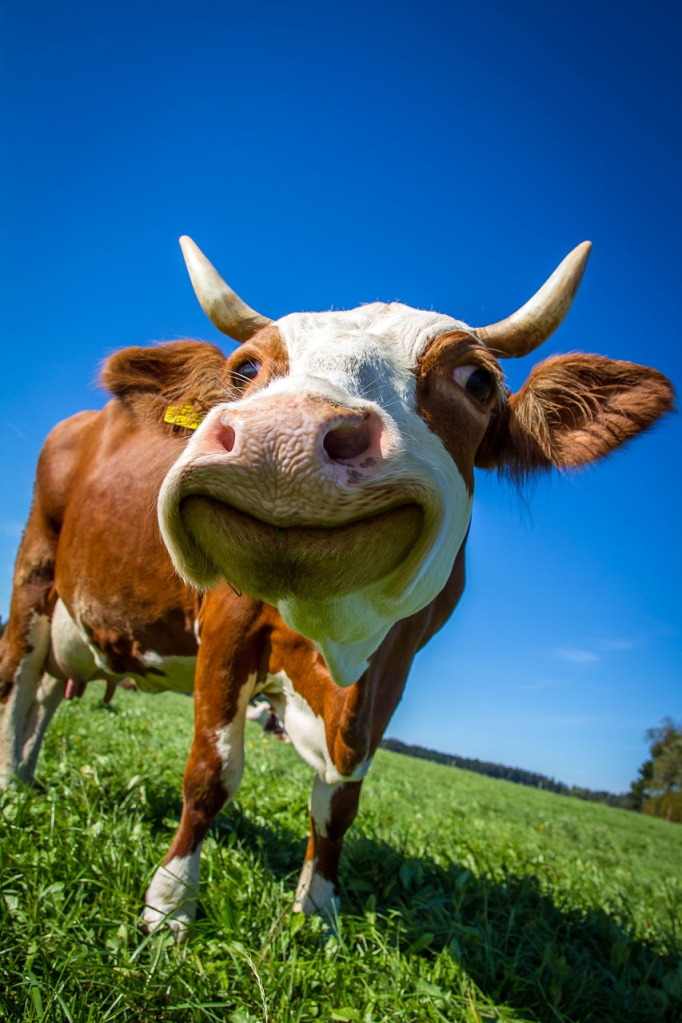
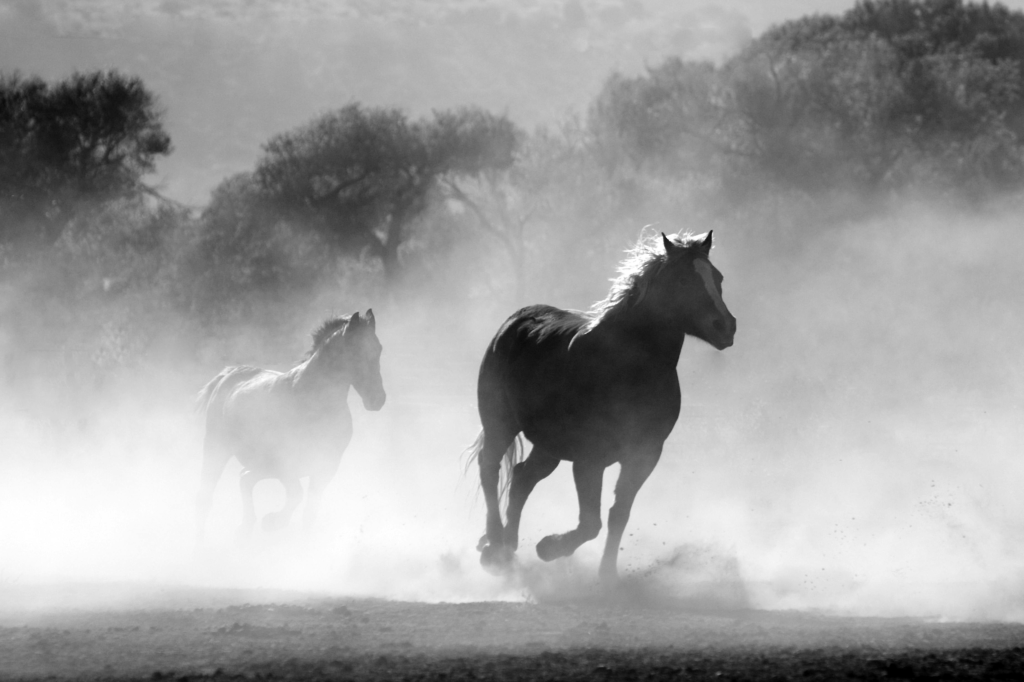
A wasp, a worm Which one does squirm I do believe It is the worm! A fly, a mosquito Which one does buzz I do believe The mosquito does. A cat, a dog Which one meows I do believe It’s the cat somehow A hen, a rooster Which one does crow I believe it’s the rooster In his morning show. A horse, a cow Which one does moo I do believe That the cow must do. A sheep, a goat Which one does baa I do believe It’s the sheep by far.
We all do have Our different voices But human’s can Mimic all the noises.
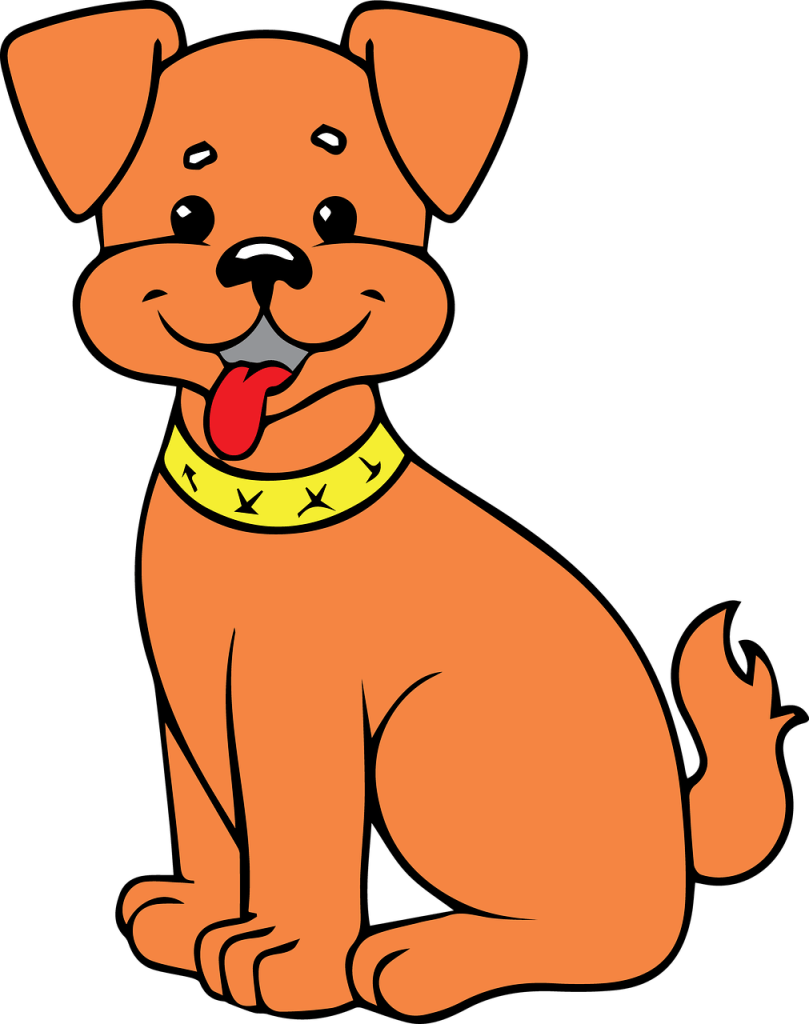
Billy Joe is my best friend Wears a collar, has four legs, Follows me consistently If there’s food he often begs. We live in leafy Doncaster In a small two-bedroom home And because I have to work a lot Billy Joe’s often left alone. Whilst I’m away at the office He has the run of the house And often creates havoc He’s not as quiet as a mouse. The neighbours are not happy When he barks and carries on But there’s very little I can do When working on the phone. His devilish disposition Gets him into lots of strife By causing so much damage Which he’s done all his short life. So how can I fix this problem I ask with nought in mind What can I do to stop him And a happy solution find. But then I think of something Should I find him a friend Which would keep him occupied And his destructiveness end.
I put my masterplan in action Bring home Archer, a puppy It appears that what I’ve done Has made Billy Joe very happy. They seem to get along quite well And spend their time in play Until they’re both exhausted Crash on the couch and stay. Archer has become Billy Joe’s best friend Bringing him home has been A victory to this end.
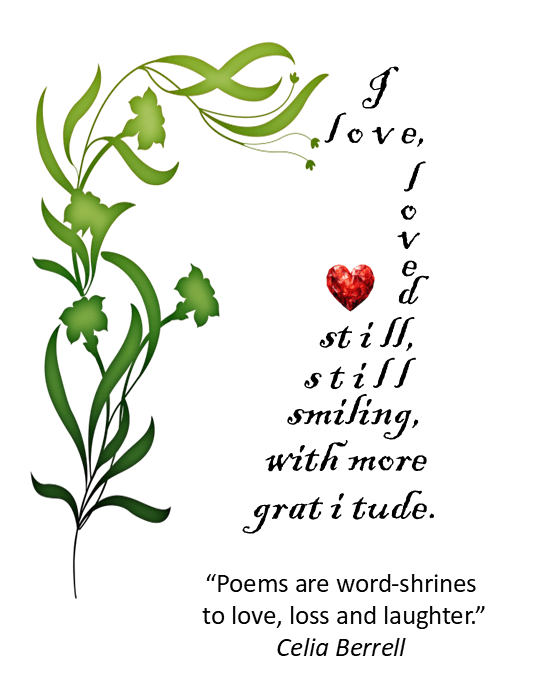
March 21st was declared World Poetry Day by UNESCO in 1999. It celebrates the power of words. Connecting our kaleidoscope of languages and cultures throughout history, how will you participate? What might you do, think or read to commemorate this day of diverse verse?
Counting the syllables in each line of a poem is a great exercise for finding and feeling its rhythm and pattern. Remember, rhyming is only one of many ways that can make writing poetic.
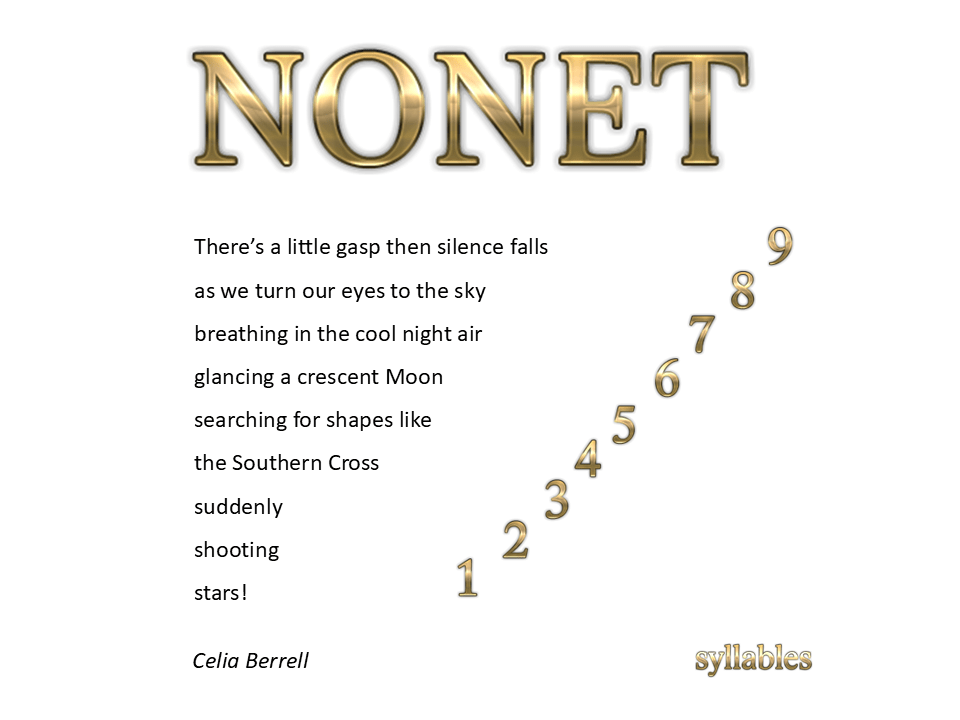
This MID-MONTH PROMPT calls for a NONET on any topic of your choosing. This nine-line poem begins with 9 syllables in the first line, finishing with 1 on the last line … or it could be the other way round, starting with 1 syllable and ending with 9.


 Australian Children’s Poetry