“H” Hummingbirds by Jan Darling

1 Comment

CURIOUS COLLECTIVES    

H HUMMINGBIRDS 


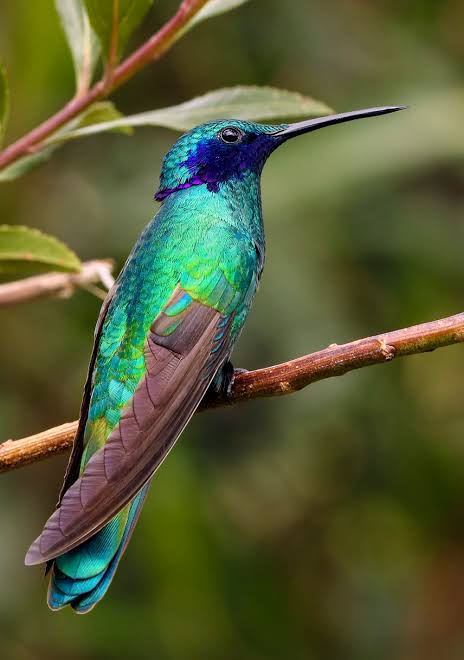
Of birds I’m the smallest in all of the world

And my eggs are the smallest as well

My fast-beating wings are always unfurled

They’re seldom allowed time to spell.


I fly forwards and backwards and sideways as well

Upside-down you can see me at work

I drink from the flowers but have no sense of smell

You wouldn’t call that such a perk.


I remember each bloom and where it did lurk

And soon as I drink I start countin’

To measure the time to return and not shirk

When that flower has refilled its fountain.


I build my nest high in forest or mountain

All velvety soft and elastic

It’s built of plant fibres, of twigs and of leaf

Bound with pure spidersilk – nothing plastic!


My nest stretches wide as I lay – fantastic!

They’re the tiniest eggs you can find

I mostly lay two, for more could be drastic

These two hungry beaks are born bald and blind.


Keeping two well-fed is a hard daily grind

A relentless search for good nectar

When I built my nest I was keeping in mind

The real need to find food in my sector.


As chicks grow big I become the collector

Using the tiny hairs on my tongue

From the reddest blossoms I steal the nectar

To nourish best healthy growth in my young.


As mother, my efforts by others, unsung,

My wings sing with constant vibration

Eighty times each second, that’s really high-strung –

Beautiful iridescent creation.


We’re tiny and bright and love admiration

Our pure beauty is known to disarm

No wonder then we discover causation:

Our Collective noun – a Hummingbird Charm.


A Charm of Hummingbirds, a wonderful scene

Fluttering, swift, by our eyes unseen

Such beauty born size of a tiny wee bean

Nature’s best gift’s in the Hummingbird seen.
 

Notes:

In how many directions can a Hummingbird fly?

What is the Hummingbird’s nest made of?

What is unique about the nest?

What colour flower attracts most attention from the Hummingbird?

What is the Collective noun for Hummingbirds?

How many times a second does the wing of the Hummingbird beat?

80 times a second is too fast for the human eye to see.

Has anyone noticed the rhyming pattern of each verse?

ABAB BCBC CDCD DEDE EFEF FGFG GHGH HIHI IJIJ 

With the final verse KKKK.

Has anyone counted the beats to each line of each verse?

11 9 11 10

Explain that rhyming poetry is often written to specific structures of rhymes and beats to the line.

Information not included in the verse:  

There are 300 different species of Hummingbirds. 

Hummingbirds have brilliant iridescent feathers, 

Being the smallest bird in the world it’s often mistaken for an insect.  

Each bird needs to drink its weight in nectar every day, the hairs at the end of the tongue help to drain all the nectar from each flower.  

The bird knows how long it will take for that nectar to be replaced in each blossom and returns the drink again.  

This also performs the task of pollination for the flowers.  

Hummingbirds seldom rest, their average heart rate is 1200 beats per minute – the average heart rate for a 12 year old person is 55 to 85 beats per minute!   The Hummingbird when resting takes 250 breaths per minute – the average 12 year old person takes between 18 and 30 breaths per minute.  

Hummingbird wings beat up to 80 times a second!!!  

Their legs are so tiny and weak that they can’t support the weight of the bird – that’s why they hover.

All this – and they can build their nests in trees up to 27 metres high.

Only a few make vocal sounds – mostly their sound is created by the vibration of their wings and tail feathers.

Hummingbirds, surprisingly are very aggressive towards each other when competing for food.
“G” Goose by Jan Darling

1 Comment

CURIOUS COLLECTIVES  

G GEESE

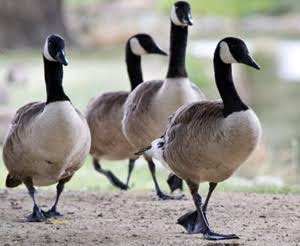
A Goose is a Goose is a Goose is a Goose

She’s a sociable gal who’s not on the loose

A gal?  Not a pal? To whom does she pander?

Her boyfriend of course – he’s called a Gander.


They’re sociable birds – faithful and kind

Once got together – as family they bind.

Goose lays the eggs and sits on their nest

While Gander the loyal, stands guard east through west.


The larger the bird, the longer the wait.

From laying of eggs to arrival of freight;

Depending on kind it’s four to five weeks

‘Tween no-one to feed, then up to nine beaks!


At two to three months they take their first flights

And have their first chance to see home from the heights

When the nest’s full, the babies are jostling

While living at home, the young are called Gosling.


With family they fly to see some of the world

Through all kinds of skies and clouds that are curled

When they reach the place where each one was hatched

They catch up with their friends and all are despatched.


When Goslings join up to fly round the clock

So many together we call them a Flock.

They seek new adventures and these they will find,

With new friendships made leaving no one behind. 


When Geese fly so close that they look like a lump

There’s a special name – they’re called a Plump.

A Plump of Geese, many a sister and brother –

How do they not bump into each other?


When adult geese fly in great numbers we say

They’re a Skein or a Team and no one will stray;

When they fly in a V-shape, that’s called a Wedge

As neat as can be from edge right to edge.


There’s a special technique they use for migration:

They gather their thousands in V formation.

Each bird flies above the bird right in front

Creating a marvellous aerial stunt…


This flight reduces resistance to wind

A clever technique with science twinned

To maximise effort and save the birds’ strength

For a successful migration, no matter the length.


So far we have Geese in Plump, Flock and Skein

In the Team and the Wedge, not together in vain.

They’re all in the air, but when Geese are grounded

It’s a Gaggle of Geese, ‘cos that’s how they sounded.


They’re creatures of habit with hearts that are true

Once they are mated it’s always the two

Each year they return to the nest made together

Regardless of age, regardless of weather.


If times are good and food is a-plenty

Your fortunate Goose may live up to twenty.

When one mate dies, the other does mourn

Often living its life alone and forlorn.


It’s true that Geese will find comfortable quarter

Their only real need – being close to the water

They eat nuts, grass and berries, mixed with some seeds

It’s much the same for all of the breeds.


Notes:

What is a male Goose called?

What is a female Goose called?

What is a young Goose called?

How old is a Gosling when he takes his first flight?

Do Goslings stay with their parents all their lives?

What do you call a group of Goslings?

How many names can you think of for groups of Geese?

What is the special name for a group of Geese on the ground?

What shape do migrating Geese fly in?

Why do Geese fly in a V shape?

How long can a Goose live?

You can listen to the honking sounds made by Geese on YouTube.  Just type in ‘Sounds of…..” and you will be directed to an appropriate website.


“The Queue” by Jan Darling

Leave a comment

THE QUEUE

‘Oh please let me in’ said the bear who was grizzly

‘I’m doing a show, I don’t want it frizzly.’

He tugged at his hair, that fussy old bear

‘I’ve just had it dyed, it used to be fair’.

Those waiting in line just smiled at each other

Ev’ryone happy to help their brother.


A worm who was third from the start of the queue

Was shivering hard and fast turning blue

‘What’s wrong with this bus? It’s broken down?

Will anyone ever get into the town?’

The town was twinkling and bright with its light

Some in the queue were starting to fight. 


A big bird with a bandage around one wing

Started to dance the highland fling

A pelican said to a stork ‘It’s outrageous,

I do hope this madness is not contagious.’

The stork looked at him squarely and quietly said

‘I wish I were home and tucked into my bed’.


Three canaries were singing (they’d been to a dance)

The song they were singing was written in France

They yodelled and trilled all over the scales

They even tried singing the song of the whales.

They ordered some orange and cherry ice cream

Enough to feed a whole basketball team.


The ice cream arrived and the queue they went crazy

Except for the piglets – they’re terribly lazy

They wanted some oak nuts, acorns they’re called,

They said they grew hair and no-one was bald

Maybe it’s true that nuts cover the scalp

But nobody there needed that kind of help.


The crowd suddenly hushed and fell into silence

Somewhere behind was an outbreak of violence 

A basketball team had arrived with some melons

Those in the crowd believed they were felons

(people who steal from others their treasures)

Getting caught redhanded was one of their pleasures.


The whole scene looked stupid to Harry the Horse

Who was trying to study the subject of Morse

He tapped and he paused and waited for action

His hoof immune from outer distraction

He tapped dah dah dit, di dah, dah and dit

If it worked he would make a quick dash for it.


Did you hear of that Harry’s ultimate fate?

His message was read and – opened the gate

Harry leapt forth and came in number nine

And met a young filly he thought divine

When Harry proposed she promised to tryst

‘Cos Harry had asked with a flick of his wrist.


Well you might think that this is all rot

That all horses can do is gallop and trot

But Harry believed he could dominate fate

By placing his faith in the power to create

A message he’d sent by dah and by dit

Had stretched his talent and used his wit.


Dah dah dit, tapped in Morse will give you a ‘g’

Di dah gives you ‘a’, dah and dit ‘t’ and ‘e’

So Harry the Horse repeated his offer

Confirmed he was humble and empty his coffer

But Tilly the Filly was thrilled with his Morse

And she happily neighed ‘Oh Harry, of course’.


Sorry I am, about this diversion

I have an aversion to total immersion

The queue got itself rattled 

They all tittle-tattled

The bus arrived late and was slow to unload

But who jumped out first?  Of course – the toad.


Continue Reading »

AARDVARK, APE, BARRACUDA, BUTTERFLY AND BEAR By Jan Darling

2 Comments


AARDVARK, APE, BARRACUDA, BUTTERFLY AND BEAR


Crowds, rabbles and throngs, clubs, hordes and troupes

Are Collectives for people who gather in Groups

But what do we call friends who are woolly and furry

Barking or whistling, singing or purry?

When they get together with family and friends

What is the word for their special blends?


Let’s start with the alphabet, that means the A

Which letter was first from the Ark would you say?

It wasn’t the whale, the worm or the shark –

But a shy bunch of prickles we call the Aardvark.

If you should meet lots of aardvaarks at once

And call them an Armoury, you’d not be a dunce.


If you’re keen on games and like jokes and japes

You’ll be happy to meet a grouping of Apes

But what will you call them – this family of jokers…

This smart clever band of naughty provokers?

The word is descriptive, it’s perfectly apt

A *Shrewdness of Apes has them all neatly capped.


Now think of the sea, in the depths of the ocean

Where swims a predator in fast or slow motion

He is hunted and eaten, grows more than three meters

Provides tasty meals and feeds plenty of eaters

He’s a high-powered fish and fond of flattery

When found in groups it’s a Barracuda Battery.


Our next group of B is from land, not the sea

And some of his kind live and sleep in a tree

Some like the snow, others the jungle

The name for this lot seems a silly bungle

It’s a **Sleuth or a Sloth when you see many Bears

An affliction of fiction from hundreds of years.


The last of our B’s flies dainty and free

Over the land but seldom the sea

She does beautiful things with colourful wings

She dances o’er flowers as the sweet bird sings

A Flutter of Butterflies is commonly heard

But Kaleidoscope’s often the Collective word.


Jan Darling


Teaching Notes:


Sounds of the Aardvark:  soft grunts as it forages (looks for food like antnests); loud grunts as it approaches its nest entrance and soft bleats if frightened.


What do you call a group of Aardvaarks?


How many ‘As’ are there in Aardvaark?


Sounds of the Ape: sounds like something between a series of dog yaps and UGH!The sound is called a ‘jibber’.


What do you call a group of Apes?


What is the meaning of ‘shrewd’?


*Shrewd means both clever and sharp.   Apes are known to observe you closely, often appearing to deduce what your next move will be.


Sounds of the Barracuda:  Sadly, most fish sounds are inaudible to the human ear.  But if we could hear them, fish-talk would sound like purrs, grunts, hums, clicks and hoots.


What is a group of Barracuda called?

Information not included in the poem: Barracuda can grow up to 100 cm and weigh up to 9 kilos.    They can live 10-15 years because they have few natural predators – only man, sharks and the Orca whale.


Sounds of Bears:  Each Bear family has a different sound, they growl and when angry they roar, Bear cubs make a hoarse bawl when they’re scared, they also make whuffing noises and they moan and grumble.


What is the name for a group of Bears?


What characteristic does this name imply?


**Both Sleuth and Sloth come from Old and Middle English.  Some writers associate the idea of Bears often seeming to look for things with ‘sleuth’ or detective.  Most agree that Sloth comes from Old English Slow-th, meaning slow.  We now know that not all Bears are slow.  In fact you should never run from a bear – he can cover 50 yards in 3 seconds!   And your running will just encourage him.  


Yards: an imperial measure equal to the metric measure of  0.9144.    Discuss Imperial and Metric measures.


What sounds do baby bears make?


Sounds of the Butterfly:  they flutter – an onomatapoeiac word.


Onomatapoeia is a “figure of speech” – it describes a word that itself sounds like the subject it refers to!


What are examples of onomatapoeiac words?

Baa-lamb.  Baa is the sound that the lamb makes.  

Or sizzle – the sound that the steak makes.

Buzz – the sound a bee makes.


What is a group of butterflies called?


Information not included in the poem:  The butterfly has four different stages of growth: the Egg, 100-300 are laid at a time.  The Caterpillar: the egg produces a caterpillar which grows to its final size and then becomes the Pupa (which are usually attached to the underside of a leaf), which finally produces the Butterfly.


All sounds are available online.  Simply Google ‘Sound of the …’ and you will be taken either to a dedicated website or to YouTube.

“Terence the ice-skating turtle” by Jan Darling

2 Comments

TERENCE THE ICE-SKATING TURTLE


When Terence the Turtle chose his career

He’d no one to help him from far or from near

No one to tell him he’d just look a fool

None to persuade him to stay on at school

Terence was fired by one burning ambition

To become an ice skater – his only mission.


When Terence was laughed at and told he was silly

He retired to the garden to talk with the Lily

Lily was clever, and dainty and sweet

She said no matter he didn’t have feet

Of the kind that were shaped to wear a skate

I believe, she said, you’re meant to beat Fate.


Believe in your dream, she said with a wink

You have to dream big –  and don’t let it shrink

Imagine your feet as if they were tiny

Feet that can sparkle in boots that are shiny

Feet that can twinkle and leap and go spinning

Feet that are grinning at prizes they’re winning.


Terence suddenly felt that his dream could come true

And decided to buy the boots that are blue

Blue boots are best when they’re put to the test

With a swanky new hand-knitted ice-skater vest

He chose red for his vest and puffed out his chest

How good he was feeling – blessed with such zest.


One day as he practised his leaps on the ice

Some kids who were passing said he looked nice

Terence was thrilled (to the boots) I guess

They suggested he add to his suit a headdress

Something stunning and utterly funky

We know, the kids said – you need a monkey.


The kids asked Terence to be their friend

And made a big placard, carefully penned

Come see Terence the Turtle, the Master of Skates,

Payment is either in cents or in dates

Terence does figures, he leaps and he spins

Terence the Turtle is great on his pins.


Meanwhile the Monkey who’d answered their ad

Turned out to be cousin to Lily’s dad

Lily was thrilled to find her relation

Even more thrilled with T’s creation

An ice-skating turtle, what a great laugh

Next you’ll be wanting promotional staff.


Not a bad idea said Chunky the Monkey

That old sign is now looking clunky

Now that we’re sorted and out on the road

I’ll be needing some help – could we look for a toad?

I’ve been recently told that toads abound

So we’ll probably find some here on the ground.


Look at that Turtle, he’s really a joke

‘Twas a cheeky young bullfrog beginning to croak

Stop there: Chunky yelled, and bellowed and shouted

Barry the Bullfrog – you’ve just now been outed

For Barry it was who had first told Terence

That he was descended from Ice-skating parents.


Terence was thrilled and started to spin

He did a quick tapdance – that made them grin.

The kids went with Chunky and Lily and Barry

Terence found love and decided to marry

They were happy forever and all shared a house

They believed in each other and life was just grouse.

“Lying in the Sun” by Jan Darling

Leave a comment

LYING IN THE SUN

It was in my fifth year of being on earth

That eating three horses expanded my girth.

Not eating those horses just any old way

I ate three of those horses every day.

They weren’t real horses – I’m not that mad

They were marzipan horses, it was just a fad.

They were made in a hurry with carrots from Perth

And served on a dish with laughter and mirth. 


I lived in a Palace (that’s why I’m called Alice)

Friends never thought about me with malice.

I had hundreds of dresses and bags full of hats 

I wrapped them in cheese, they were eaten by rats.

My clothes were all frilly, which really was silly

The skirts were too big for riding my filly

I found some pants that made me look thin

But I bought the wrong ones, not for her, but for him.


My most special friend was a kangaroo

Who flapped like mad whenever she flew.

I’d wind her up, put plug to socket

And then she’d jump right up like a rocket.

But I don’t want to bore – you’d like to hear more?

I’m far too modest to hog the floor.

But if listen you must, and in truth you trust

You’ll forgive me if I that truth adjust?


It’s a question of season, no rhyme, no reason

Makes no difference, if sunny or freezin’

I like to have fun when I lie in the sun

Eating fresh honey spread onto a bun.

Do I tell the truth or do I lie in the sun?

It seems that truth can be either one

‘Cos lie is a multi meaning word

It can tell you the truth or just be absurd. 

Jan Darling

Spotlight on Jan Darling

6 Comments

About Jan:

It seems to me that I have taken an awfully long time to find my true voice.  Now, writing ‘Nonsense Poems’ I am thoroughly enjoying myself.   This year I have also re-discovered classical poetry and am writing sonnets and other rhyme and metre forms.  I had never thought of children’s poetry although I’ve written short stories for children.  I am just loving writing the poems and I’m finding that they leave my head in a space far away from its physical surroundings.  It makes me wish I were a child again. It’s pure therapy.

A DAY AT THE ZOO

It was the cat who said, as she climbed out of bed

Is today the day we go to the Zoo?

Prince was teaching the rabbit, the one who’s blue,

To sit on my head, and be one of the crew

The day was cold, the duck said ah-choo

It’s freezing out there, I’m not going with you.


Duck, you know I’m the Prince, just look at my crown

Pure rabbit it is, it’s soft as down

I tuck Bunny around till his ears fall right down

They snuggle my own and steady my crown.

You’re just a duck, but I am the Prince

Won’t you do what I say without that wince?


The duck wrapped his scarf four times round his beak

And grumbling went off to change the week.

Is it Mumday or Chewsday or Whimsday he mumbles

Oh Duck – take your pick but bring Violet Crumbles.

Then we’re off to the Zoo to see Reginald Roo

Horace the Hippo, young Bruno and Pru.


Prudence the penguin started to flush

For on the Prince, she’d once had a crush

Come on, move quickly, you guys at the front

We’re here to see the Honey Bear stunt.

But Bruno the Bear was away that day

He’d gone to the Bank to collect his pay.


You pay that Bear to sit around here?

Chewing his bamboo, making us stare?

The Zooman nodded and showed us the path

To the Elephant park – they were taking their bath.

The cat saw pictures of lions on a sign

Saying I’m off to see some family of mine. 


Prudence was sad she’d not seen her hero

The Zooman complained that the temp. was zero.

There was only one elephant out in the park

The bathroom was hidden away in the dark.

Bunny was tiring of being the crown

And he started wishing that he could get down.


Nothing was going the way he was wishing

So the Prince took a pelican off to go fishing

Everyone grumped about one thing or t’other

And Duck was quacking about his red brother

His mother was green, his sister was blue

How that had happened nobody knew.


So the Day at the Zoo turned into a flop

With everyone grizzling, way over the top

It’s not that bad, elephant blew on his trumpet

Two kids remembered to bring me a crumpet

The cat complained that the trip was a mess

And set of for home to change her dress.

Jan Darling

‘One hump or two?’ by Jan Darling

Leave a comment

ONE HUMP OR TWO?


There are things not to ask when you go to the Zoo

Like how many animals, hundreds or few?

Like do you have tigers and lions that eat people?

And do your giraffes have to live in a steeple?

Do people-like monkeys swing through the trees

Do they all live in cages or out in the breeze.?


When you go to the Zoo they give you a guide

That tells how to find the ones that will hide

The cleverest creatures will give you the slip

Or if you’re too close they may give you a nip.

You have to walk slowly and take your time

Banging their cages is really a crime.


There are wild things all sizes and colours and hues

Creatures who only can live in our Zoos.

They’re from hot and cold climates all over the world

They have tails that are crooked, fluffy or curled.

My favourites of all are g’rillas and camels

‘Cos both of them are really big mammals.


Of everything mammal I’m most fond of the camel

They don’t seem to find that the hump is a trammel

Some camels have one hump and others have two

You’ll often find both of them guests in your Zoo.

Because they’re so tall they see over the wall

And into their neighbour’s adjacent stall.


But let’s talk of the camel whose top parts are hairy

The single-hump two-toed hoofed dromedary.

He has long legs and fat lips and looks very snouty

More snooty and haughty than modest and pouty

His hump is really a storeroom for fat

Which he turns into water – now how about that?


He’s adapted for desert and struts overland

That’s why he’s called a ship of the sand

Two rows of long lashes flutter over his eyes

And a third clear eyelid protects them from flies

There’s a real clever trick for when sand is blowing

He can close his nostrils to keep himself going.


He’s been used as a taxi, a car and a train

As a beast of burden, in sandstorm or rain ,

He donates to nature – this noble beast

Skin and wool to wear, milk and meat to feast.

He’s the Arabian camel, that handsome beast

Native North African, and Middle of East.


Now listen to this – I don’t want to faze ya

The Bactrian camels from central Asia –

They have two bumps – they’ve a double hump

But these camels have never been known to grump.

They’re sociable, useful, tidy, and witty

But occasionally also known to be spitty.


When two camels meet, in desert or street

They hasten to make their formal ‘greet’

With an eye on each other the greeting may go

Slow, while in their faces they blow.

After all this brotherly sharing of breath

They decide to be friends from now unto death.


Now hear a few facts ‘bout our humpy new friends

Pregnancy lasts fourteen months beforet ends

Mother births one, but occasionally twins,

And calves can be walking within thirty mins!

At two weeks of age, or during the third

Mother and baby return to the herd.


At seven our camels are ready to mate

They’re all grown up and at the right weight

They’ll size up their chance at the local dance

And off with their partners, a new life they’ll chance.

Sadly for us at ten years and seven

They’re usually called from duty to heaven.


Jan Darling

Go back

Your message has been sent

Warning
Warning
Warning
Warning

Warning.