
Betty’s hair
I once knew a girl called Betty
Whose hair looked just like spaghetti.
She tied it in strands
With big rubber bands,
Then chopped it up for confetti.
James Aitchison
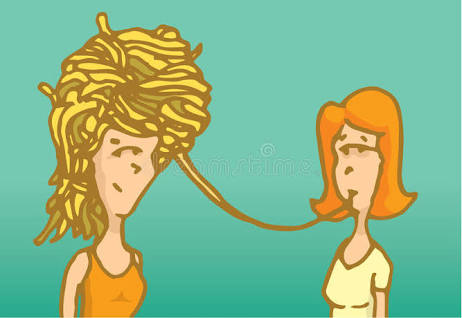
Betty’s hair
I once knew a girl called Betty
Whose hair looked just like spaghetti.
She tied it in strands
With big rubber bands,
Then chopped it up for confetti.
James Aitchison
About James:
My poetry plans for 2018: write more children’s poems, experiment with new forms and themes, and build up a collection for a book.
Armpit
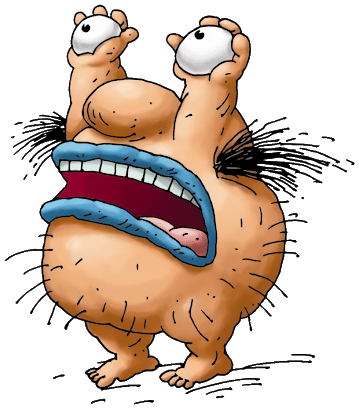
Armpit, armpit,
Look at you!
You’re so hollow —
What to do!
You like to sweat
And grow hair,
No wonder you’re
Hiding there!
James Aitchison
Anticipation
Know you’re inside.
Heard
the floorboards creak,
and the chair ping.
Know
you’re treading quietly
Know
you’ll open door – to me,
‘specially to me,
if I don’t
make fuss.
Won’t make fuss. Won’t.
Nnnnyeup. Come on, come on
Waiting. Can’t you tell?
Open door. Open.
Won’t rush in,
Want you out. Out!
Don’t I?
Heard word
The word – w-a-l-k, Walk!
Can’t trick me.
Know we’re going,
soon
Yeeeing. Not soon enough!
Steps louder
You’re at door, at it.
Open. Open now!
Before wag tail off,
before get dizzy, turning, turning.
Oh, gruff, wruff, nnnyeupp!
Oh, yes, yes, door opening.
Open!
And… we’re off. To park
To bark and run,
And have some fun.

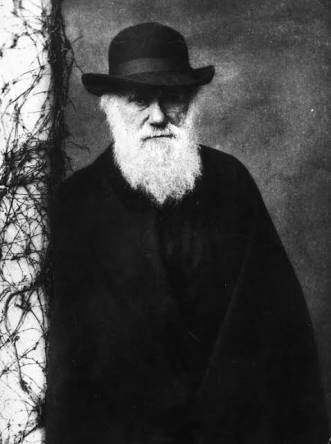
Revolutionary Evolution
In eighteen hundred and thirty one
when Charles was only twenty-two
he sailed upon the Beagle’s run
to chart the lands and ocean blue.
Collecting samples on the way
of creatures, plants and fossils found
he drew and wrote his notes each day
of all the life-forms that abound.
This five-year trek to foreign lands
made Darwin sick, which wasn’t good.
But dedication, task in hand,
he always did the best he could.
Returning home, he thought a lot
and started to experiment
to test his theories, note and jot
what everything he learnt had meant.
His famous book was published in
the year of eighteen fifty nine.
The Bishop said it was a sin
and contravened the Church’s line.
“On The Origin of Species”
was published, eighteen fifty nine.
This work on Evolution still
amazes us as most sublime
The first ever spacewalk
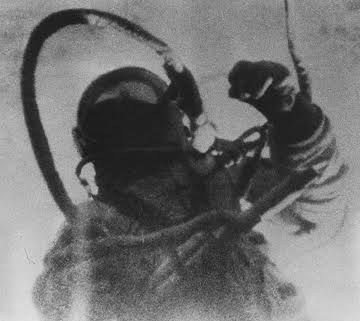
In March of 1965
Alexi Leonov survived
the zero pressure out in space
and won the human spacewalk race.
500 k above our world
Alexi floated, spun and twirled.
He felt just like a grain of sand;
a tiny speck in space so grand.
His Russian air-filled space-suit soon
expanded like a big balloon.
Calamity. He’s now too big
to fit inside the capsule rig!
He’d lost the use of glove and boot;
was forced to leak air from his suit.
Intense twelve minutes: fear and fun.
He made it home. The race was won
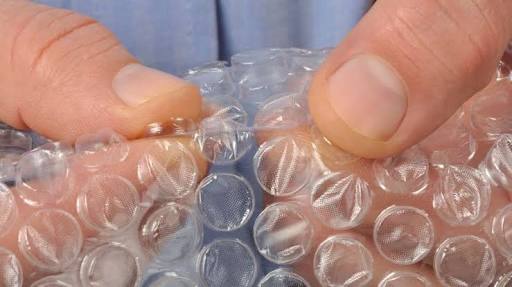
The Bubble Rap
(an accidental invention)
Back in the fifties
there’s Alfred and Marc.
Two keen engineers
with plenty of spark.
Making a wallpaper
easy to clean
by coating it in
polyethylene.
Their plans were a flop
as blisters went pop.
With troublesome bubbles
the wallpaper’s dropped.
They couldn’t get rid
of that air-filled gap.
Instead they’d invented
the bubble wrap!
If you’re way off track
or you need some slack.
If you think you’ll crack
or you’ve lost the knack
If you’re in a flap
and your mind might snap
then pack up your troubles
in bubble wrap.
Moisture resistant
elastic and strong
it won’t scratch your things.
Abrasion is wrong.
Cushion possessions
on pockets of air.
It makes a good bed
if there’s more than one layer.
Pop it and snap it
or bend it and wrap it.
Bubbles in plastic’s
the best way to pack it.
About Celia:
CELIA BERRELL’s keeping out of mischief.
I’m always on the lookout for fun science snippets to share through the CSIRO’s Double Helix magazine, so I scour the science news on the internet most days in my spare time. This July The Science Rhymes book – Second Edition will off to the printers! It’s got twice as many poems as the first edition and I’ve chosen Jabiru Publishing to be my partner, as was a bit lonely publishing the first edition on my own. Some Whitfield State School students have been attending my Poetry Club meetings over the last couple of months and will be spending part of their holiday break creating their own Science Rhymes about famous scientists and awesome discoveries, for a SCIENCE HALL OF FAME (please share your poems too!). We will then present our poems in a recital for National Science Week (11th – 19th August). You can see the examples I created for our Poetry Club by clicking the Download tab on the Science Rhymes website. I’m currently waiting to hear back from the Cairns Tropical Writers Festival organisers to find out if I will have a BOOK LAUNCH with them on Friday 10th August at the Hilton Hotel, Cairns. If they say YES, I’ll be looking for brave school students to help present some poems from the new book. It’s a really exciting year!
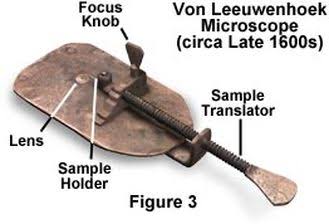
Anton’s Microscopes
Anton van Leeuwenhoek (1632-1723)
(beasts on your teeth!)
A Dutchman named Anton
was someone you’d count on
to tell you precisely
the things he could see.
A microscope maker
and shopkeeping draper
discovering life that’s
as small as can be.
He magnified beasts that
he scraped from his teeth
and watched as they swam
like some creatures in seas.
Learning there’s animals
formed from just single-cells.
Seeing that even a
flea can have fleas!
Finding bacteria
in our interior.
Sending this news
across the sea.
Anton astounded us.
What he had found in us
started the science
mi-cros-co-py
Meeting the Monster
One night a monster most grotesque
Crawled out from underneath my desk!
I closed my book and took a look
And felt that my whole body shook!
It had a head with horrid horns
That looked as sharp as roses’ thorns;
It’s nose was like a length of hose
Which drooped right down to touch its toes!
With eyes the size of fruit mince pies
It gazed at me in mute surprise
And then as it began to think,
I saw those eyes were turning pink,
While when its mouth was open wide,
The teeth were huge I saw inside!
A sound came out: more like a croak;
I cringed in fear, but then it spoke!
It rasped: ‘So sorry I’m so badly smelling:
I’ve come to help you with your spelling!’
But even as the monster spoke,
My dog went ‘Woof!’ and I awoke.
Monty Edwards
ONE HUMP OR TWO?
There are things not to ask when you go to the Zoo
Like how many animals, hundreds or few?
Like do you have tigers and lions that eat people?
And do your giraffes have to live in a steeple?
Do people-like monkeys swing through the trees
Do they all live in cages or out in the breeze.?
When you go to the Zoo they give you a guide
That tells how to find the ones that will hide
The cleverest creatures will give you the slip
Or if you’re too close they may give you a nip.
You have to walk slowly and take your time
Banging their cages is really a crime.
There are wild things all sizes and colours and hues
Creatures who only can live in our Zoos.
They’re from hot and cold climates all over the world
They have tails that are crooked, fluffy or curled.
My favourites of all are g’rillas and camels
‘Cos both of them are really big mammals.
Of everything mammal I’m most fond of the camel
They don’t seem to find that the hump is a trammel
Some camels have one hump and others have two
You’ll often find both of them guests in your Zoo.
Because they’re so tall they see over the wall
And into their neighbour’s adjacent stall.
But let’s talk of the camel whose top parts are hairy
The single-hump two-toed hoofed dromedary.
He has long legs and fat lips and looks very snouty
More snooty and haughty than modest and pouty
His hump is really a storeroom for fat
Which he turns into water – now how about that?
He’s adapted for desert and struts overland
That’s why he’s called a ship of the sand
Two rows of long lashes flutter over his eyes
And a third clear eyelid protects them from flies
There’s a real clever trick for when sand is blowing
He can close his nostrils to keep himself going.
He’s been used as a taxi, a car and a train
As a beast of burden, in sandstorm or rain ,
He donates to nature – this noble beast
Skin and wool to wear, milk and meat to feast.
He’s the Arabian camel, that handsome beast
Native North African, and Middle of East.
Now listen to this – I don’t want to faze ya
The Bactrian camels from central Asia –
They have two bumps – they’ve a double hump
But these camels have never been known to grump.
They’re sociable, useful, tidy, and witty
But occasionally also known to be spitty.
When two camels meet, in desert or street
They hasten to make their formal ‘greet’
With an eye on each other the greeting may go
Slow, while in their faces they blow.
After all this brotherly sharing of breath
They decide to be friends from now unto death.
Now hear a few facts ‘bout our humpy new friends
Pregnancy lasts fourteen months before’t ends
Mother births one, but occasionally twins,
And calves can be walking within thirty mins!
At two weeks of age, or during the third
Mother and baby return to the herd.
At seven our camels are ready to mate
They’re all grown up and at the right weight
They’ll size up their chance at the local dance
And off with their partners, a new life they’ll chance.
Sadly for us at ten years and seven
They’re usually called from duty to heaven.
Jan Darling



 Australian Children’s Poetry