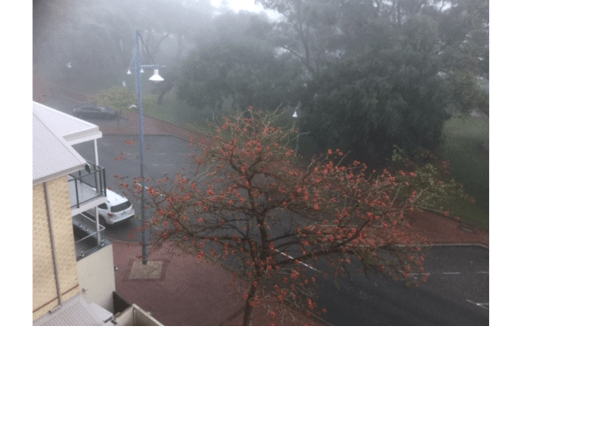
“Ahoy there, Corona” by James Aitchison

1 Comment

Ahoy there, Corona


On the bad, bad ship Corona,

Captain Covid spies

People coming too close —

Oh what a lovely prize!


He calls, “Ahoy!  Fresh treasure, lads,”

And his virus acts,

Attacking those amongst us

Where hygiene is too lax.


So let’s sink the bad Corona,

Captain Covid too,

Because I wish good health

For everyone like you!


“Avast Ye” by Marques Dobrow

Leave a comment

“Name the Game (A Riddle)” by Monty Edwards

6 Comments

“Name the Game” by Monty Edwards is his 100th poem of the day since November 2015.

Congratulations and Thankyou for sharing your creativity with us.


My riddle is about a game, so see if you can guess its name.

Of course, I’ll give you many clues, but in the end, you’ll have to choose.

The game is played by day or night, but if at night you’ll need some light.

Play summer, winter, there’s no reason not to play in any season.


This game is played in many lands and players need to use their hands,

Although one hand would be enough, because this game’s not very rough.

It can’t be called a contact sport, and never needs a field or court.

So do not think you’ll use a ball, for that would not be right at all.


Out of doors or play inside – play wherever you decide.

Play in almost any place. This game doesn’t need much space. 

Players always move in turn and there are other rules to learn.

There is no need to use your feet; that’s not the way that you compete.


This game does not have any aces, nor any Jacks with funny faces,

But players each have king and queen, while cards are nowhere to be seen!

Most find it best to share a table, but please make sure your table’s stable!

This rule must never be ignored, since you’ll place pieces on a board.


But boards are used in many a game: can you give my game a name?

Now since this riddle’s almost done, I’ll give a clue – another one:

The pieces number thirty two. Sixteen of them will be for you.

Another player has the rest and you two play to see who’s best!


Your pieces form a fighting force, though blood is never shed, of course

And though a kind of war you play, no-one is injured in the fray, 

Since mostly you will think and plan, then make each move as best you can.

But win or lose or even draw, you’ll want to play this game some more.


It’s time for you to make your guess. . . . . . . . . . . . . . 

This riddle’s answer must be . . . . . . . . . . . . .  . .  . . .  .

 

“Fish and chips on the beach” by Jenny Erlanger

1 Comment


Fish and chips on the beach


It’s so bossy and loud

and stands out from the crowd

as we gather together to eat.

Dashing forwards and back,

it looks set to attack

every bird homing in on a treat.

It arches its neck

then it rushes to check,

with a glare and a threatening screech,

that the other gulls round

don’t pick up from the ground

what we’ve tossed from our spot on the beach.

So obsessed with the job

of controlling the mob,

it has missed quite a banquet tonight.

It has not had a grip

on a single thrown chip

and it serves the antagonist right!


“TEDDY COMES TO TOWN” by James Aitchison

Leave a comment

Teddy comes to town


One fine day I’d

love to meet

a teddy bear walking

down the street.

Wobble-bobble,

tubble-bobble,

a teddy bear walking

down the street.


We’d go shopping,

then to tea,

with cakes and sandwiches

one, two, three.

Wobble-bobble,

tubble-bobble,

we’d fill our tummies, that

bear and me!


Next time you go

down the street,

perhaps a teddy bear

you will meet.

Wobble-bobble,

tubble-bobble,

a teddy bear walking

down the street.

“The Illusive Toy” by Toni Newell

2 Comments

The Illusive Toy


Whirr, whirr, bang, bang,

What a noise you make,

Spinning, spinning, all around,

I’m scared you might break.

You have a captive audience,

All mesmerised by you,

Darting here and darting there,

But seldom in our view.

You appear to be mysterious,

We don’t know what you are,

You dash in and out so quickly,

We only see you from afar.

My mind’s so undecided,

Is it just technology?

For I have no clue what it is,

Or what it’s meant to be.

“Bananas” by Ron Marsh

Leave a comment

“Satin Bower Birds” By Margaret Brazzale

Leave a comment

Satin Bower Birds arrive in south eastern Victoria at the beginning of Autumn. They are attractive birds with brown and green feathers and a pattern like fish scales on their breast. The male bird, however, is a shiny, satin like blue-black.    The male is very elusive, seen only occasionally flitting through the under storey. He spends the entire winter building and decorating his bower with found, or stolen, blue or shiny objects.


In the Autumn they arrive,

Resplendent in browns and green

But the elusive male will shyly hide

In his shining blue sateen.

A secretive bird, he’ll spend the hours

Titivating the bridal bower

With treasures stolen – or maybe found –

He’ll decorate the ground around.

When the bower – having reached perfection,

Is to the females satisfaction

They will all depart –

Leaving the bower to fall apart.

When the days shorten and the fogs roll in,

The birds will return and begin again.

“Kind Boomerang” by Toni Newell

Leave a comment

I used to throw a Frisbee,

But it would never come back,

Billy Joe would make it worse,

The Frisbee he’d hijack.

One day I saw a programme,

About Aborigines,

There it was, the boomerang,

Thrown with so much ease.

The magic of the boomerang,

When thrown it comes back,

Saving time and energy,

Searching down some track.

It took a little time to learn,

But I’ve got it in the bag,

My boomerang is kind to me,

It returns, I shouldn’t brag.

“Imagining a TARDIS”  by Celia Berrell with Teacher Notes

2 Comments

Imagining a TARDIS  by Celia Berrell
(Time And Relative Dimension In Space)


What a wonderful toy is the TARDIS.

Doctor Who’s little blue

police box.

It’s bigger inside.

So much stuff it can hide,

from a skate-park to

clean pairs of socks.

Owning a magical TARDIS,

do you think it’s a

secret we’d keep?

Or would that depend

on inviting some friends …

and whether we’d need any sleep?

With a stay-or-go-anywhere TARDIS,

there are infinite things

we could do.

It has so much appeal,

for a toy that’s not real …

let’s imagine instead that it’s true!


https://www.businessinsider.com.au/physics-of-the-doctor-who-tardis-box-2015-6?r=US&IR=T

The physics of Doctor Who’s awesome time-travelling ship aren’t exactly science fiction

The time-travelling box in “Doctor Who,” called the TARDIS, is easily the coolest part of the show. It’s capable of travelling any direction through space and time — so it can visit any planet at any point in history.s a modal window.

Characters in “Doctor Who” are always amazed by its unassuming appearance (it looks like a blue police box from the 1960s) and that it’s much bigger on the inside than it is on the outside.

But what we really want to know is how does it work, and when can we have one?

Physicists Ben Tippett and Dave Tsang actually wrote a paper about how TARDIS time travel might be possible. Tippet and Tsang propose that the TARDIS moves as a bubble of space-time back and forth along a loop of time.

If you connect a bunch of those loops, then the TARDIS could move to any point in space and time, just like it does in the TV show.

The paper is called “Traversable Achronal Retrograde Domains in Spacetime.” Yes, the acronym spells out “TARDIS,” and yes, they named their proposed space-time bubble that on purpose.

Tsang and Tippet also claim they work at the Gallifrey Polytechnic Institute and Gallifrey Institute of Technology (Doctor Who is from a place called Gallifrey). But in real life they’re physics professors at McGill University and the University of British Columbia respectively. Basically, they are awesome Doctor Who fanboys.

How would it work?

Einstein’s theory of general relativity tells us that space and time are not separate — they’re wrapped up in four dimensions. There are three dimensions of space (up-down, left-right, and forward-backward) and the dimension of time (future-past). Together they combine to create the fabric of space-time in which all the matter in the universe exists.

Massive objects, like stars and galaxies, stretch and curve this fabric into themselves. Physicists don’t really know how space-time warps, but it’s theoretically possible to fold one of those curves back on itself, creating what’s called a closed time-like curve (CTC).

It’s basically a loop:

The objects inside the loop in the graphic are called light cones. Light cones mark the boundaries of space-time that any one event (like the burst of light from a supernova explosion) can reach.

For example, imagine you’re standing at the red dot in the diagram below. Time is on the y-axis (left) and space is on the x-axis (bottom):

The area enclosed by the white lines is everything you can see without travelling at the speed of light. If a star exploded 10 light-years away from you (orange dot), then it would take 10 years for light from that event to reach you.

The only way to get outside of a light cone is by travelling faster than the speed of light. Normally light cones are arranged in a straight line, because time moves in a straight line like the right side of the diagram below. But CTCs tip light cones, making it possible to travel backward and forward in time, like the left side of the diagram:

If the TARDIS/bubble of space-time entered into one of those loops, it would be possible to travel backward and forward through space and time.

It would look kind of like the following graphic from Tippet and Tsang’s paper. (It’s obviously the TARDIS and Amy Pond from seasons five, six, and seven.)

No world-saving space traveller would be very effective just travelling in a circle. So Tippet and Tsang outlined a mathematical formula to chop up different space-time curves and splice them back together; basically, a way to form tunnels that could transport you to any time and place

In later episodes, where the Doctor travels into the future, the space-time vortex in the opening credits appears red instead of blue.

Fans speculate that’s because light emitted by an object moving away from a viewer (perhaps into the future) shifts toward longer wavelengths. I.e. As the object moves away, the wavelengths of its light stretch out, making it appear more red:

In episodes where the Doctor goes to the past, the tunnel appears blue, since as the opposite happens: When and object moves toward us in space-time, the wavelength of light compresses toward the blue end of the spectrum.

When can I have a TARDIS?

You can’t. At least until we figure out a way to create CTCs and invent a material that can repel gravity and somehow travel faster than the speed of light, then use it to build a blue telephone booth.

Time travel is tricky and full of risky paradoxes — like the grandfather paradox, where you accidentally stop your own birth. And again, physicists still aren’t sure about how the geometry of space-time works. (We’re also waiting for the scientific papers that explain why the TARDIS is bigger on the inside than it is on the outside and how it can instantaneously appear and disappear.)

The consensus seems to be that time travel into the future is possible, but time travel into the past is much trickier and may not be possible at all.

So for now maybe we should just follow the Doctor’s lead and call it a “big ball of wibbly wobbly timey-wimey stuff” and just enjoy the show.