Silver slime creates a pathway.
Night time is when journeying begins
Across leaf litter, deep into the rainforest
In silence they explore,
Leaving little trace of their adventure. Just a sparkle.

Silver slime creates a pathway.
Night time is when journeying begins
Across leaf litter, deep into the rainforest
In silence they explore,
Leaving little trace of their adventure. Just a sparkle.
I don’t know why I’ve got feet
when I could have had wheels,
for wheels go so much faster.
Imagine me flying down our street
not in my trainers or boots
but on wheels, with my ghetto-blaster.
Imagine people turning to stare
and all telling me to slow down
before I caused a disaster.
Imagine me gliding off into space
with a quick little nod to the Moon,
then simply going straight past her. . .
© Katherine Gallagher
(Published in Through a Window, Longman, 1995)
Remembrance Day,
Ever in our hearts,
Minute of silence observed,
Every year at the eleventh hour, day and month,
Marking respect and gratitude,
Being reverent to those
Returned soldiers,
And those who lost their lives.
Never forgetting their sacrifice,
Commemorating their achievements,
Embracing a universal loss.
Defending home and country,
And human rights and more,
Yet always striving for peace, not war.

On the eleventh hour
Of the eleventh day
Of the eleventh month,
1918, the guns fell silent.
World War One,
The war to end all wars,
Was over.
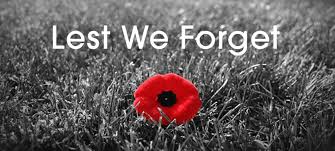
Lest we forget, in Flanders fields,
The poppies grew blood red,
When Aussie boys, far from their homes,
Were number’d ’mongst the dead.
They came from farms where red gums grew,
From ’neath the Southern Cross;
No friendly sun, no magpie’s cry,
Would ever mark their loss.
In ev’ry town, in ev’ry park,
Their solemn statues stand.
Lest we forget those brave young men
Whose honour shaped our land.

The blood of her song
is a litany against war
It throbs against the air
echoes remembrance
The sky doesn’t break
as her voice wavers
The world craves her song
of forgiveness and hope
She sings for those who died in war
and a crowd gathers silently
offering homage to soldiers
Anzacs and those who have borne
their love and innocence,
always reminding

Grandpa Joe had been to war,
Many years ago,
And he shared many stories,
With his grandson Billy Joe.
He told him of the friends he’d made,
Whilst serving in the war,
Of how they’d fought and survived,
And loved life even more.
He spoke of bombs and weapons,
Of trenches and terrain,
Of aeroplanes that flew so low,
That the noise drove him insane.
Of many nights that knew no sleep,
Of many days which saw no relief,
He spoke of devastation,
And of God and his belief.
He spoke of the heat, during the day,
And of the bitter cold at night,
Of always feeling hungry,
And to this no end in sight.
Of fighting shrubs and narrow paths,
Of mosquitoes high and low,
Of crawling on his belly,
To strike another blow.
He remembered the weight of his rifle,
As he carried it close to his chest,
Of shots that were constantly ringing,
As they pushed forward, getting no rest.
He spoke of the wounded and dying,
Of the sadness and loss that he felt,
Of the fear and adrenalin pumping,
And of the air and how it had smelt.
Billy Joe listened intently,
To what he had to say,
And thought his grandpa was the best,
In each and every way.
Toni Newell
How can I ever forget
The legless soldier
Ribbons on his chest
In his wheelchair
That November morning
In the hospital grounds
When the bugle sounded
Tears streaming down his cheeks
His muffled sobs and
His sweet-faced young nurse
Leaning to offer him comfort –
In that single moment
A snapshot of what
War does to people.
© Dianne Bates
Soldiers smelled garlic;
horseradish; sulphur.
A kind of fusty
mustardy odour.
Then twelve hours later
they’d start to go blind,
get pus-filled blisters
and possibly died.
Chemist Fritz Haber
in World War One,
made mustard gas poison
worse than a gun.
This silently sneaky
chemical tool
spread crippling pain
that was very cruel.
Survivors were checked.
When blood tests were done,
most of their body’s
immune cells had gone.
They’d lost the white cells that
could turn into cancer.
Was mustard gas poison
a possible answer?
From a weapon of war
to helping the sick
this chemical cocktail
became our first pick
to fight against cancer.
A new remedy!
Oncology’s
chemotherapy.
Celia Berrell
Poppies for Poppy
Poppies are the colour red
From The Great War it is said
It became known as World War One
When the second war came along
Poppies droop like they are sad
About the countries that were mad
lots of people died from wars
mostly for a crazy cause
My Poppy is my daddy’s dad
And around this time he too, gets sad
We march the streets 11th November
and for all the fallen, we remember.
We’ve just installed a bee hive
in our garden – what a fright.
Well, that is what I thought when bumble bees came into sight.
I’d squeal and flap my arms around-
‘Don’t come next to me.’
Get out of our garden, you’re spoiling dolly’s tea.’
‘Polly put the kettle on,
we’ll scare them off with steam.’
It didn’t work and all I did was run and hide and scream.
But Mum and Dad explained my fear
which swiftly flew away.
‘Bees are good ecology,
ensuring coming days.
Busy workers demonstrate the ethics of hard work,
collecting pollen from the flowers-
the spreading is a perk.
Without the buzzy, fuzzy mites
we wouldn’t have our food.’
And being as I love my grub,
‘That would be mighty rude.’

 Australian Children’s Poetry