
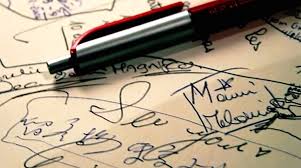
RATTY WRITING
Slopy loops,
O’s like hoops,
b’s like d’s,
a’s like e’s,
are they m’s?
are they n’s?
c that e?
no, it’s c,
lots of blots,
lots of dots —
what a scrawl,
can’t read at all!
RATTY WRITING
Slopy loops,
O’s like hoops,
b’s like d’s,
a’s like e’s,
are they m’s?
are they n’s?
c that e?
no, it’s c,
lots of blots,
lots of dots —
what a scrawl,
can’t read at all!
Scoot Scoot
Said the scooter
Shining in the sun
Time for me
To have some fun
Zoom Zoom
Said the scooter
Rider and helmet ready
Today we go fast
But take it steady
Whoosh Whoosh
Said the scooter
Down the street
Feet on kickboard
Who can we beat?
Zip Zip
Said the scooter
What a fun day
Zooming along
Smiling all the way
Jump Jump
Said the scooter
Trying a trick
Up in the air
And down real quick
Ring Ring
Said the scooter
A loud ring of the bell
Turn and head back
All is well
Yawn Yawn
Said the scooter
I’ve had a big day
Time to go home
Slowly make my way
Shuffle Shuffle
Said the scooter
Trudging back to the shed
Time for scooters
To be in scooter bed
Snooze Snooze
Said the scooter
Snoring away
Dreaming of tomorrow
Another scooter day
(Toy Chest Anthology 2017)

Locked inside a toy store:
My golden dream comes true.
Sixteen hours all by myself,
So much for me to do.
First I’ll have a slinky race,
Then wake up Jack In The Box.
Next I’ll grab a Lego kit
And build a giant fox.
An Xbox challenge will follow
Where I’ll come out Number One.
Then I’ll find a pogo stick,
And I’ve only just begun.
Now I play with GI Joe:
I give my best salute.
Then I easily win a game
Of Trivial Pursuit.
Time now for the skipping rope:
It cannot be so hard.
Some trickery I next will learn
From a pack of magic cards.
A jigsaw puzzle tests me out,
And then I fly a kite.
Do I have time to colour in?
Why yes, I have all night!
I wrestle with a teddy bear,
I wear a cowboy hat;
I fly a model aeroplane,
I swing a cricket bat.
A policeman taps upon the door,
I turn around, I’m grinning.
I guess he must have heard the sounds
Of my karaoke singing.
Fun’s over now, he drives me home,
My mind is filled with glee.
If only I could next be trapped
In the ice creamery.
I sneaked into a toy store,
And hid in a cubby house,
There I waited patiently,
As quiet as a mouse.
Finally the lights went off,
I heard the back door slam,
I crept out of the cubby house,
And now, here I am.
I look around the many shelves,
And see a teddy bear,
He opens his eyes slowly,
They look at me and stare.
I move a little closer,
And he holds out a paw,
I put my hand out in return,
And shake his paw of straw.
Then I see Donald Duck,
He’s quacking, on the floor,
Waking up the other toys,
Which were all asleep before.
There is quite a commotion,
As Thomas blows his whistle,
Barbie struts her fashion,
The goat tries to eat the thistle.
Then lego pieces start to move,
And form a winding bridge,
Hermit and me with others,
Cross to find a quaint village.
There we come upon an elf,
Who’s dressed in green and dancing,
We all join in, holding hands,
All singing and laughing.
Now the bear starts to perform,
Then ‘Superman’ flies in,
He tries to keep us all in order,
Whilst the games finally begin.
All the animals on the farm,
Are now roaming free,
The cows and pigs and sheep and more,
Have this pent-up energy.
They start to run around the shop,
Making lots and lots of noise,
Running into the furniture,
And many other toys.
They run until exhausted,
When finally they stop,
Allowing me to hug them,
And pat their furry top.
All at once I feel I’m moving,
How can it possibly be?
I hear a voice which won’t stop calling,
I’ve been dreaming; my mum’s calling me.
Toni Newell
Teacher Notes by Jeanie Axton
Watch the film clip below on “100 Years of Toys”
Saffron and rose madder
sea-sheet reflects
in symmetry the sky
On this burnished brightness
waves encroach
Leaden opaque they flow
zinc white against
the watercolour’s glow
A vision or a concept
beckons bright
But words
which seemed so clear and pure
across it spread
do nothing but obscure
Humpty Dumpty
jumped in the sea.
Humpty Dumpty
sank instantly.
All the young mermaids
and their mermen
couldn’t get Humpty
to surface again.
©Katherine Gallagher,

Water fight
My father is fighting the water
but some of it’s gone up his nose.
My sister and brother
and even my mother
are soggy right down to their toes.
They’re starting to sound pretty angry,
I’ll have to give in, I suppose
but I know for a fact
that I can’t be attacked
if I stay on this end of the hose.
This was first published in “Play” (Paper Dart Press, UK 2018)
Creating Poetry
Some wear their heart on their sleeve,
Whilst others invest in words,
Sometimes in the form of poetry,
Allowing themselves to be heard.
Taking the opportunity,
To sift through muddled thoughts,
Seeking a type of clarity,
Words on a page that are caught.
Then harnessing the words,
Forming some sort of order,
Making sense of them all,
Before gluing them together.
And, when it is finished,
Words cast in cement,
Sentiment and message delivered,
Produce a passage that’s relevant.

Hidden Writing
Some write with pleasure since young,
Some find writing homework a chore.
Some don’t write much at all
Or, write later in life when they’re bored.
Writing is a hidden gift for some,
Late bloomers are like a late flowering flower
Some are just blooming late,
having doubts from the start until,
they finish with flourishing power.
 Australian Children’s Poetry