“Demetrius to Elizabeth” by Virginia Lowe

Leave a comment

Demetrius to Elizabeth


The donkeys of Hydra

are sure-footed, reliable

taking goods from the harbour

up steep cliffs to town


Kangaroos in Australia

will not carry loads

their convenient pockets

hold nothing but babies


These unlikely animals

at unbeatable speed

leap yards at a bound

but only on flats


Without animals to harness

or bear our loads

how can we farm?


We’ll get rich with children!

We’ll get rich with gold!


Virginia Lowe


“Monkeys” by Jan Darling with Teacher Notes

Leave a comment

CURIOUS COLLECTIVES    NO. 12


  1. MONKEYS


I kept reading and counting and reading some more

Till I reached two hundred and sixty four

That’s the number of species in the world of the Monkey

That’s a BIG number – that’s really funky.


To complicate things a little bit more

(at this point my eyes began to get sore)

They’re divided again by where they are found

In the East or the West, up trees, on the ground.


Turns out it’s easier to go by the times

When we’re talking of Monkeys from different climes

The Old World Monkey has a different nose

And his tail’s less supportive when he’s on his toes.


They all live in Africa and all over Asia

Seventy eight species – enough to amaze ya.

The Old World Monkey has a narrower nose

And his tail’s less useful when dealing with foes.


But the New World Monkey’s *prehensile of tail

Adding grip, swing and style – through the trees he can sail;

His side-facing nostrils and a nose which is flatter

Let him breathe easy while sharing his chatter.


Where is his homeland – this Monkey-come-lately?

Is it Norway or Russia or somewhere less stately?

He hails from America, the land in the South

Where he lives his life happy, not just hand to mouth.


************************************


Who’s the tiniest Monkey on all of the Earth?

In West Amazon basin his mother gives birth

The Pygmy Marmoset looks neat on your hand

(Being kept as a pet is not everywhere banned).


He’s around 6 inches, that’s reeeaally small

And six ounces he weighs – head to toe that is all.

He’s covered with fur – gray, tawny or gold

He can live to fifteen – now that’s pretty old.


His tail beats his body – it’s LONGER than that

It’s strong and it’s muscly, with no useless fat.

He can leap in the air to fifteen feet

Fifteen feet! He’s six inches?  That’s really neat.


They talk to each other with chatter and trilling

In pitches so high your eardrum’s not willing

To listen to sound so hurtful to ears.

Listening too long can bring you to tears.


In families they live together for life

Facing each problem, solving their strife

The Troop (as they’re called) can number round nine

At night: they will rest; daily: hunt, hide and dine.


They eat leaves, bugs and plants and love to sip sap

They waste nothing when eating, not even a scrap.

Their heads they can swing from east right to west

One eighty degrees – with broad view they are blest.


From danger they hide, jumping branch over tree

Dashing and leaping to keep themselves free,

Forest plants offer cover, and their colour does blend

Into the background, the foliage their friend.


*************************************


So, friends of the Monkey…  what do youthink?

You’d like a Monkey who’s special – what about pink?

Take a look at the Mandrill, he’s clearly no frump

Blue and red on the face and a brightly hued rump.


The Mandrill’s from Old World and lives where it rains

In equatorial forests, not open plains;

There’s no Monkey as colourful in jungle or Zoo

As the world’s biggest Monkey – the Mandrill, that’s who!


His face is clean shaven, the better to show

His features in colours that brilliantly glow

He eats roots, fruits and insects, small animals, too

And the Mandrill most colourful is first in the queue.


They live all together in hundreds called Hordes

They’re generally happy, not crossing swords,

They groom each other as most **primates do

Whether living in the wild or at home in the Zoo.


How big does this biggest of all Monkeys grow?

Sixty kilo’s the biggest on record, we know.

The female grows half of the size of the male

He’s always more colourful, she tends toward pale.


********************************************


We’ve Monkeys from Old World and New World – that’s swell

We’ve done smallest and biggest and brightest as well

But there’s still something more of interest to know

About how people describe Monkey groups when on show.


In general you’ll hear more Collectives in use –

Remembering’s easy, their meanings are loose.

You’ll find Monkeys in Barrels, in Tribes and in Troops

In Missions and Cartloads – all terms for their Groups.


And most fun of all is to watch them at play

They’re very like us when they join in the fray

The Infants are cared for by all of the Troop

Aunts, uncles and cousins are kept in the loop.


Jan Darling


*prehensile: means capable of grasping.  Monkeys use their prehensile tails for balancing when on the ground and for grasping when tree-swinging.


**primates are an order of mammals which is distinguished by having hands and hand-like feet and forward-facing eyes.  They are often agile tree-dwellers.  Monkeys, apes, marmosets, lemurs, bushbabies and humans (not so agile when swinging through trees) all share these features

Teaching notes


Compare Imperial measures used in this verse to Metric.

6 inches =  15.2cms

6 ounces =170g

15 feet  = 4.57m

60 kilograms = 132lbs

The writer mixed Imperial with metric to simplify the verse.


How many species of Monkey are there?


How are the two groups of Monkeys generally defined?


On which continents do these groups live?


Which is the biggest Monkey in the world?

Is he Old World or New World?


Which is the smallest Monkey in the world?

Is he Old World or New World?


Which is the most colourful Monkey in the world?


Information not included in the verse:

The brilliant blue of the face and rump of the Mandrill is not due to pigmentation but results from the scattering of light by the array of collagen fibres in the dermis.  The exact shade is determined by the size and spacing of these fibres in different areas of the skin.

A similar condition causes polar bear fur to look white.  Polar fur actually has no pigmentation, its fibres are hollow and made of keratin with light scattering particles which create the white effect.  The polar bear’s skin is actually black!


How many terms for groups of Monkeys can you name?


Go to YouTube for spectacular pictures of Mandrills and Pygmy Marmosets.


  • There are currently 264 known monkey
  • Monkeyscan be divided into two groups, Old World monkeysthat live in Africa and Asia, and New World monkeys that live in South America.
  • A baboon is an example of an Old World monkey, while a marmoset is an example of a New World monkey.
  • Apes are not monkeys.


  • Some monkeys live on the ground, while others live in trees.
  • Different monkey species eat a variety of foods, such as fruit, insects, flowers, leaves and reptiles.
  • Most monkeys have tails.
  • Groups of monkeys are known as a ‘tribe’, ‘troop’ or ‘mission’.
  • The Pygmy Marmoset is the smallest type of monkey, with adults weighing between 120 and 140 grams.
  • The Mandrill is the largest type of monkey, with adult males weighing up to 35 kg.
  • Capuchin monkeys are believed to be one of the smartest New World monkey species. They have the ability to use tools, learn new skills and show various signs of self-awareness.
  • Spider monkeys get their name because of their long arms, legs and tail.
  • The monkey is the 9th animal that appears on the Chinese zodiac, appearing as the zodiac sign in 2016.
  • The noses of New World monkeysare flatter than the narrow noses of the Old World monkeys, and have side-facing nostrils. New World monkeys are the onlymonkeys with prehensile tails—in comparison with the shorter, non-grasping tails of the anthropoids of the Old World.

NW have 12 premolars instead of 8.

Mostly arboreal, NW more likely to form pair bonds


“My Secret Friend” by Margaret Pearce

Leave a comment


MY SECRET FRIEND


My secret friend

So fat and round

Under my bed

Was often found.


My secret friend

Liked being alone

Avoids emails

And mobile phone.


My secret friend

Never idle

Can walk up walls

With sideways sidle.


My secret friend

With legs of eight

And web well made

Prepares to wait.


My secret friend

Clears my room

Of flying pests

His web their tomb.


My secret friend

Costs nothing to feed

He always finds

The food he’ll need.


My secret friend

So black and furry

After he’s fed

Is almost purry.


My secret friend

So very lovable

Mum believes

He’s only trouble.


My secret friend

Had got to go

Mum thinks spiders

The deadly foe.


My secret friend

Doesn’t have ears

But very hurt

About Mum’s fears.


My secret friend

Was so bereft

He packed his bags

And quickly left.


My secret friend

So fat and round

Under my bed

No longer found.


oooOooo


© Margaret Pearce

“Pet Rex” by Celia Berrel

Leave a comment

Pet Rex


Some animals

don’t make good pets.

And one of them

would be T rex.

A dinosaur

so tall and wide

there’s no way

he could live inside.


Tyrannosaurus rex

is large.

His head would fill-up

your garage.

Twelve metre driveways

would be great

to fit his tail

inside the gate.


With stinky breath

from eating meat

you’d want to clean

his big strong teeth.

He’s got bad manners

when he’s fed.

His tiny arms

can’t reach his head!


first published in CSIRO’s Scientriffic magazine issue #77 March 2012
with illustration by Science Writer Mike McRae

“Planet of the Dogs” by Jeanie Axton

Leave a comment


Reverse our worlds

and you will see

That you dear human

can learn from me


A few simple commands

will have it down pat

Human Obedience class

get it right, get a pat


Here’s our training

my faithful friend

Planned by me

from start to end


Command 1: Get up


Get up Get up

sleepy head

The sun is up

get out of bed


Command 2: Walk


Walk time next

but no doggy lead

I’m ready now

and will not plead


Command 3: Heel


Heel no way

let me run

Training a human

is lots of fun


Command 4: Stop


Stop right now

yes at that tree

Every day

for my morning pee


Command 5: Talk


Talk to me

say nice things

I’m a good boy

among other things


Command 6: Sit


Sit on down

in front of me

Scratch my belly

if you please


Command 7: Wait


Sit there nicely

wait for a command

I may have a snooze

don’t be alarmed


Command 8: Drop it


Drop the book

you now are reading

Observe my eyes

see them pleading


Command 8: Bark


One bark means bacon

two barks a meat pie

Three barks a lie down

then a contented sigh


Command 9: Couch


Shift over a bit

I need more space

And a lambs wool rug

in my comfy place


Command 10: Bed


No longer I’ll sleep

in a box outdoors

Or in the winter

on the cold laundry floor


Command 11: Move over


Move over move over

on our king size bed

Let me stretch out

and please scratch my head


Command 12: I love you


I love our routine

Commands to impart

Human being playmates

Are really very smart

“My Dog Jed” by Margaret Pearce

Leave a comment

MY DOG JED


My dog Jed

Is never trouble

What killed that hen

Was his double.


This Jack Russell terror

Known as Jed

Into mischief and error

Is never led.


My dog Jed

With teeth so white

Doesn’t chase cats

Who want to fight.


My dog Jed

So loyal and sweet

Not near the bed

With its ripped sheet.


My dog Jed

Is very athletic

Running ahead

To beat the traffic.


My dog Jed

So very good

Turns up to be fed

When he should.


My dog Jed

Is never blue

As around he’s led

To sniff quoll poo.


My dog Jed

Is not argumentative

And can’t be said

To be offensive.


My dog Jed

Doesn’t cause trouble

Damage alleged

Was caused by his double.


My dog Jed

Loves to roam

Is selectively deaf

About coming home.


My dog Jed

So very courageous

In disgrace in the shed

I think it’s outrageous

oooOooo


© Margaret Pearce

“Flying Tale” by Julie Cahill

Leave a comment

Flying Tale

The most favorite pet we ever had 

was little ‘Peanut,’ named by Dad

The tiny fit upon my hand

soon sprung out 

like a rubber band

When laying, he was Peanut Paste

fortunately without the taste

When chasing ‘Fly,’

our other dog 

t’was left behind at every log

We watched Fly in the longest grass

grass that bent

while Peanut chased his . . . tail 😁

Julie Cahill 

“Colour (non)sense” by James Aitchison

Leave a comment

Colour (non)sense

Polar bears are white

so they blend with the view.

Kangaroos are brown

so they blend in too.

But my new pyjamas —

bought in the Bahamas —

are purple, orange and blue!


“Europa’s” Secrets by Celia Berrell

Leave a comment

Europa’s Secrets by Celia Berrell


There’s hope Europa has a sea

where living things could really be

because this moon of Jupiter

has lots of solid ice water.


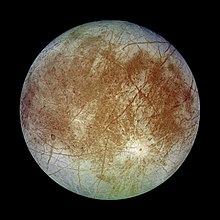
The pictures of Europa show

a crusty surface white as snow

with many lines and ridges mixed

like ice sheets that have cracked and fixed.


As Jupiter’s great gravity

distorts Europa’s cavity

that energy and friction heats

and melts some water underneath.


We think this frozen water layer

could make a sea that’s hiding there.

So just below that crusty shell

it’s possible some microbes dwell.


Or what if it turns out to hold

some animals both weird and bold

that roam Europa’s chilly sea.

True aliens to you and me!


First published in Scientriffic (March 2011)

Reproduced with permission of CSIRO

www.doublehelix.csiro.au 

Discovering life exists in places beyond Earth – like Jupiter’s icy moon Europa – could be a reality in our lifetime.  Thinking about it makes my imagination run wild!  What will these creatures be like?

Teacher Notes by Jeanie Axton

Heres an interesting article from the NASA website

https://solarsystem.nasa.gov/moons/jupiter-moons/europa/in-depth/

As far as poetry goes this topic stimulates the creative imagination of us all. Ask students to brain storm possibilities and then come up with a list of describing words that could be used to match their ideas. An acrostic could be an easy form of poetry to start with on this topic and then move on to other ways of presenting ideas in poetry. Have Fun.
“DAD’S BARBECUE” by Ron Marsh

Leave a comment

DAD’S BARBECUE

My father had a bullock,

I don’t know where he found it,

The council man came by one day,

And said he must impound it.

Now Dad said that it can’t be done,

Because he’d asked a few,

Of his friends and relatives  

To a barbecue.

The bull heard this, and with a roar,

He headed for the hills,

He had no plans for barbecues,

And salad for the frills.

So dad and all the family,

And some of his good friends,

Had barbecue of vegetables,

And other odds and ends.