“Who Nose the Way?” by Celia Berrell

Leave a comment

Who Nose the Way?


Scientists find

a good sense of smell

goes hand-in-hand

with direction as well.


If spatial awareness

is one of your gifts,

it’s likely your nose has

superior sniff!


Discerning more scents

in the air we have crossed

may help with our sense

of NOT getting lost.


So “follow your nose”

as we like to say,

and “smell the roses”

along the way.


https://www.the-scientist.com/notebook/a-keen-sense-of-smell-appears-to-go-hand-in-hand-with-spatial-memory-65352?utm_campaign=TS_DAILY%20NEWSLETTER_2019&utm_source=hs_email&utm_medium=email&utm_content=69866511&_hsenc=p2ANqtz–PjJOhf66RFiR_I0QB-_oiLgt_bfPbAi2kRRprNugMdZi9s5dz9-ZFi6H8zWikHxpIC5jV_XHT3O8yakJC-t1y-45q0XkGH4JOL9Cws5Lj4SDy74k&_hsmi=69866511

“The Cup” by Kylie Covark

Leave a comment

The Cup


The cup was gold and gleaming,

It shimmered in the sun,

It called to us along the line

As we were poised to run.

The starter called, ‘Get ready!’

The starter called, ‘Get set!’

Our hearts were pounding loudly,

Our hands were sleek with sweat.

And when we heard the cry of ‘Go!’

We sprang off in a burst,

We ran until our muscles ached,

All striving to be first.

And when the race was over,

There were no pouts or tears,

The cup went to the winner

And we each gave her three cheers.

But don’t think I don’t want it.

I’m never giving up.

I’ll train till I’m the fastest,

Then I’ll win that golden cup.

“Ladybird” by JR Poulter

Leave a comment

Please click Ladybird for todays post

Ladybird!

“March Madness” by James Aitchison

Leave a comment
MARCH MADNESS
 
 
A hippo hopped happily
off to the zoo.
A red rhino ran rudely;
what will I do?
Rich rhubarb blew raspberries
at my dessert.
They bounced off my spoon and all
over my shirt.
March madness is followed by
April Fool’s Day;
And that’s not all folks — there’s more
mayhem in May!

“Spotted Mini” by Andrew Carter

Leave a comment

“Ladybird” by Andrew Carter

Leave a comment

Lady Bird Ladybird, you look so special swish

Floating downstream on a green slender reed

Ants cannot attack you you sit as flat as a dish

Riding a green rush – to a family of mouths to feed


So hip, so cool, you are resplendent

Coloured red with dark polka dots

Yes you, you are fiercely independent

Seven colourful joys, joyous black spots


Now your babies are calling-out, out from under logs

They’ve eaten their fill of aphids and scale

Surrounded by dragonflies, spiders and frogs

No time to drown, no time to tire, no time at all to fail


You’re on your way with a mighty display

Your colouring to them is bad taste

Scarlet red and dotty spotty spots, say

They better leave your babies post haste


“True bugs are suckers” by Celia Berrell with Notes

Leave a comment

True bugs are suckers


A true bug’s an insect

but insects aren’t bugs

if they eat by chomp-chomp

instead of glug-glug.


Ants are not bugs.

They’ve got mandible jaws.

While a bug’s beaky tube

will get used like a straw.


Bugs feed on liquids

like plant-juice or blood

by piercing the skin

and then sucking, glug-glug.


Cicadas and bed-bugs

are glug-sucking guys.

But ladybird beetles

aren’t bugs – so get wise!


First published in Double Helix (September 2016)

Reproduced with permission of CSIRO

www.doublehelix.csiro.au


http://www.amentsoc.org/insects/fact-files/orders/hemiptera.html

True bugs (Order: Hemiptera)

Including shieldbugs, plant bugs, bed bugs, pondskaters, cicadas, water bugs, aphids and scale insects.

The Hemiptera are called ‘true’ bugs because everyone – entomologists included – tend to call all insects ‘bugs’. That is a loose term, whereas the true bugs are just those contained within the insect order Hemiptera.

This group of insects is very large, with around 75,000 species worldwide. Around 1,700 of these can be found in the British Isles. Many of them are very different from each other, but all of them have piercing mouthparts with which they can suck the juices from plants or animals – usually plants. Their mouthparts are contained in a beak (or rostrum) which is usually held underneath the body when not in use.

As plant feeders, some bugs – such as the aphids, for example – are serious agricultural pests, not just because they damage crops but because they can transmit viral diseases too. However, most bugs are not pests.

The true bugs often have long antennae divided into a small number of segments, and the front wings can be somewhat hardened. Some bugs resemble beetles, but beetles have wing covers that do not overlap, unlike the bugs.

Bugs undergo incomplete metamorphosis – their life cycle stages include the egg, adult-like nymphs, and winged adults.

http://www.ento.csiro.au/education/insects/hemiptera.html

Hemiptera: bugs, aphids and cicadas

Characteristics
The insects in this order are extremely diverse in their size, shape and colour. There are about 6000 described species in Australia, ranging in size from 1 to 110 millimetres in length. The name Hemiptera means ‘half wing’ and all hemipterans share the following features:


2 pairs of wings, although some species may be wingless and others have only forewings. Wings are generally membranous but in some species the forewings may be hardened at the base
Piercing or sucking mouthparts appearing as a sharply pointed tube known as a proboscis or rostrum, which extends from the underside of the head
Compound eyes of various forms
Up to 3 ocelli present
Antennae vary and may be either short, or long and conspicuous

The young of hemipterans look like small adults. Some bugs may be mistaken for beetles but can be distinguished by their mouthparts as beetles have mandibulate mouthparts while bugs have sucking/piercing mouthparts.

Feeding
Most species of Hemiptera are plant feeders, sucking sap with many causing considerable damage to crops, ornamental garden plants such as roses, shrubs and trees. Some species are bloodsuckers of mammals and birds while others are predators that feed on other invertebrates, including some pest species and are therefore beneficial to man.


Proboscis of an assassin bug


https://theamericanscholar.org/a-bug-is-not-a-beetle/#.VzfDTZVJlD8

What is a bug? It’s not something you come down with. (A bacterium is not a bug; a virus is certainly not a bug.) A bug is not any old thing that crawls. It’s not a tick, not a mite, not a gnat. A ladybug is not a bug. (It’s a beetle.) Certainly, a butterfly is not a bug. Bug, it turns out, is a technical term: “true bugs” are insects in the order Hemiptera.

The stinkbug is a true bug. So are the squash bug, the toad bug, the red bug, the seed bug, the box elder bug, and the assassin bug. Assassin bugs capture their insect prey with sticky front legs and stab them with their little beaks. There are ambush bugs. Ambush bugs sit like statues on flower petals, waiting, waiting … Waterbugs are true bugs. The bedbug is a bug. Ugh.

Besides being an insect with the usual six legs and three main body divisions—head, thorax, and abdomen—bugs have sucking, beak-like mouth parts and their life cycle occurs in a pattern called “incomplete metamorphosis.” They go from egg to nymph (a baby that looks like a small adult) to adult, with no larva stage.

“Free as a Ladybird” by Sioban Timmer

Leave a comment

Free As a Ladybird


Ladybird ladybird fly to your tree

The children are screaming and coming to see

They have a big jar and a challenge to get

A most lovely bug they can keep as a pet


Ladybird ladybird fly away free

Take to the wind and race with the bee

For you are too quick and too nimble and wild

To be trapped and contained by a curious child


Ladybird ladybird fly to your den

The children have gone and you’re safe once again

The garden is quiet just you and the gnomes

Now the children have all raced away to their homes.

“Ladybird” by Kylie Covark

Leave a comment

Ladybird


A ruby jewel

Lands on my hand

And I’m in love

But understand

That though I’d so

Love her to stay

This spotty friend

Must fly away.

“Food Art” by Jenny Erlanger

Leave a comment

Food art

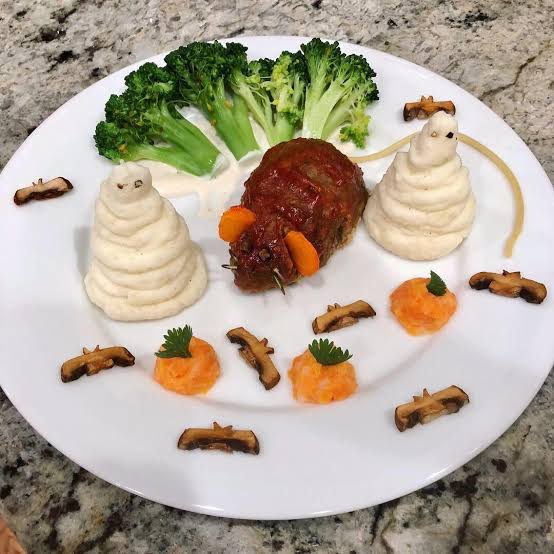
This mashed potato sculpture

is a splendid work of art,

the best I’ve ever seen, I’d have to say

and every slice of carrot,

carved to look just like a heart,

you’ve set out in a most creative way.

The broccoli looks pretty

cut in perfect little flowers.

I love the way the peas spell out my name

and I know that you’ve been working

on this masterpiece for hours,

but I’m sorry, every night I feel the same.

It doesn’t really matter

what you do to all this food,

what handiwork you serve me up for tea.

I may seem quite ungrateful

and perhaps a little rude,

but, they still all taste like vegetables to me!