“6 Classic Children’s Poems” recommended by Alex Morrison

Leave a comment

6 Classic Children’s Poems

Reading poetry offers a multitude of benefits. It offers unique perspectives that can broaden your worldview and some even stretch your mind to its limits as you work to decipher what the author is really trying to communicate. These reasons are why many English classes in school often include poetry in the curriculum.

Children’s poems may be targeted specifically for a younger audience. But many share valuable insight that people of all ages can benefit from. Here we put together a shortlist of classic children’s poems that we think everyone should read.

1. “The Owl and the Pussy-Cat” – Edward Lear

The Owl and the Pussy-Cat is perhaps Edward Lear’s most famous poem which was published in 1871. The nonsense poem (a type of literature that uses nonsensical words) was written for a three-year-old girl who was the daughter of Lear’s friend. This poem tells a simple love story between an owl and a cat, and their marriage to each other. Although more than 100 years old, the poem remains beloved to this day and was actually voted the most popular childhood poem in Britain in 2014.

2. “Jabberwocky” – Lewis Carroll

Lewis Carroll was the pen name for Charles Lutwidge Dodgson who was an English writer most notably known for Alice’s Adventures in Wonderland. The poem Jabberwocky first appeared in its sequel Through the Looking-Glass in which the character Alice finds a poem that can only be read by holding it up to a mirror. She finds that she’s unable to decipher what it means. The poem offers one of the best examples of nonsense poetry and has given us words like “galumphing” and “chortle”.

3. “From a Railway Carriage” – Robert Louis Stevenson

From a Railway Carriage was written by Robert Louis Stevenson and was published as part of his 1885 volume A Child’s Garden of Verses. The poem offers a great example of versification which uses rhythmic patterns to describe a train journey and the view from the window. The poem is told from the author’s perspective so we see that the scenery is constantly shifting.

4. “Matilda” – Hilaire Belloc

Matilda was written by Hilaire Belloc and is a classic child’s poem that tells a cautionary tale of the devastating consequences of telling lies. The main subject, Matilda, has a fondness for telling lies which her aunt has tried unsuccessfully since her youth to change. Her constant telling of lies led to her burning to death along with the house she was in. Despite the dark subject, the poem has a light and humorous tone and teaches a valuable lesson that’s applicable today.

5. “Macavity, the Mystery Cat” – T. S. Eliot,

Macavity, the mystery cat was written by author T.S. Eliot and tells a short story about Macavity, a master criminal that leaves behind no evidence of his crimes. Macavity is described as a tall and thin ginger cat with deeply sunken eyes. Macavity is a master criminal who constantly evades authorities and covers his tracks with incredible skill. The main character is loosely based on Professor Moriarty from the Sherlock Holmes stories.

6. “Life Doesn’t Frighten Me” – Maya Angelou

Life Doesn’t Frighten Me by Maya Angelou is a simple, repetitive poem. There is no rhyme scheme in the poem but there are lines that rhyme. As you can likely already determined from the title, the poem shares a powerful story about overcoming fear and the importance of self-belief. The poem is written from a child’s perspective so we get more insight on how she describes and overcomes her fear.

Author’s Bio 

Alex Morrison has been a SEO expert for over 10 years. In this time, he has worked with a range of businesses giving him an in depth understanding of many different industries including home improvement, financial support and health care.

Gallipoli (Triolet) by Katherine Gallagher

Leave a comment

Gallipoli

Say that the word is gall–

cusped, broken on the tongue:

redolent of battles that appal.

Say that the word is gall.

Heroes, ordinary blokes, all

sung for Gaba Tepe, dying young –

Say that the word is gall

cusped, broken on the tongue.

Katherine Gallagher


My Country

Leave a comment

Today is a tribute to Dorothea Mackellar.

“On the 24th November, 2017, the Society of Women Writers of NSW, along with donors to the memorial, will gather in Waverley Cemetery at 6pm to ‘unveil’ the substantial marble plaque. This honours the poet, Dorothea Mackellar (1885-1968) with the 8 lines of her most famous stanza from her poem My Country, there for all to see in perpetuity. Her gravesite is close by the ’jewel sea’ of the Pacific Ocean she so lovingly describes”

poet Dorothea Mackeller

My Country – Poem by Dorothea Mackellar

The love of field and coppice
Of green and shaded lanes,
Of ordered woods and gardens
Is running in your veins.
Strong love of grey-blue distance,
Brown streams and soft, dim skies
I know, but cannot share it,
My love is otherwise.

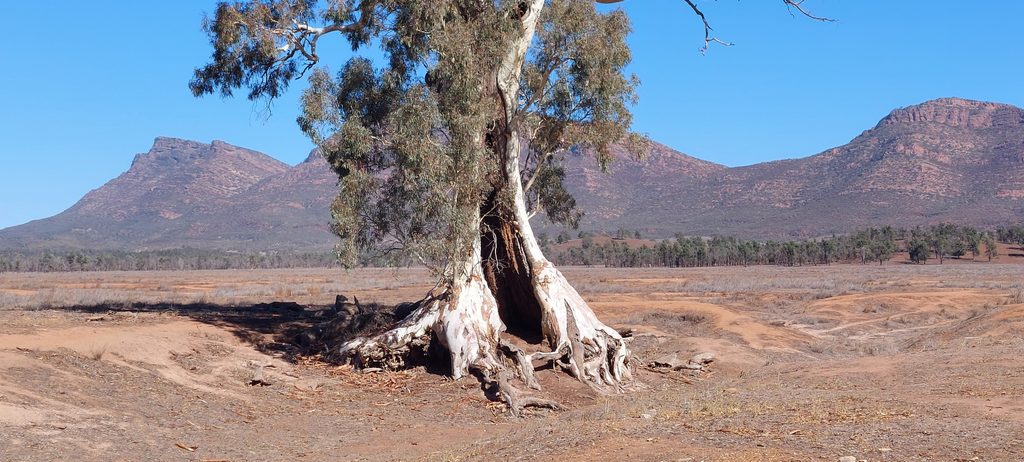
I love a sunburnt country,
A land of sweeping plains,
Of ragged mountain ranges,
Of droughts and flooding rains.
I love her far horizons,
I love her jewel-sea,
Her beauty and her terror
The wide brown land for me!

The stark white ring-barked forests,
All tragic to the moon,
The sapphire-misted mountains,
The hot gold hush of noon,
Green tangle of the brushes
Where lithe lianas coil,
And orchids deck the tree-tops,
And ferns the warm dark soil.

Core of my heart, my country!
Her pitiless blue sky,
When, sick at heart, around us
We see the cattle die
But then the grey clouds gather,
And we can bless again
The drumming of an army,
The steady soaking rain.

Core of my heart, my country!
Land of the rainbow gold,
For flood and fire and famine
She pays us back threefold.
Over the thirsty paddocks,
Watch, after many days,
The filmy veil of greenness
That thickens as we gaze …

An opal-hearted country,
A wilful, lavish land
All you who have not loved her,
You will not understand
though Earth holds many splendours,
Wherever I may die,
I know to what brown country
My homing thoughts will fly

Cat-a-static by Celia Berrell

Leave a comment

(Nikola Tesla 1856 – 1943)


Nikola loved his childhood cat

the sleek, majestic black-Macak.

A cat whose fur would click and spark

when days were chilly, dry and dark

as stroking black-Macak’s fur coat

could cause a tiny lightning bolt.


Nikola Tesla loved his cat

the sparkling, zappy black-Macak.

That static electricity

inspired young Tesla, cleverly

inventing things quite technical.

Especially electrical.


From neon lights and radios

to radar and remote controls.

Transistors, robots, X-ray zones

and AC power to our homes.

Tesla had a genius knack

that started through his cat Macak!


A Tribute to “Trim” Matthew Flinders’ Cat by Pat Simmons

Leave a comment

Trim

I’m a black cat

A special cat

A ship’s cat.

I was born on the Reliance in 1799.

Of all my mother’s kittens

I was the one most fine.

I’m a black cat

A special cat

A ship’s cat.

I have four snow-white paws

And a white star on my chest.

Of all the cats on board this ship

The sailors like me best.

I’m a black cat

A special cat

A ship’s cat.

When it’s time for dinner

I don’t eat with other cats.

I sit at table with the men.

I don’t care for rats.

I’m a black cat

A special cat

A ship’s cat.

I have a trusty friend

And Matthew Flinders is his name.

He has called me Trim.

I think together we’ll find fame.

I’m a black cat

A special cat

A ship’s cat.

Matthew is a clever man

He’s sailed all round this land.

He’s given it a name

And that’s Australia – how grand.

Perhaps you have a cat at home

Is it as fine as me?

Would it like to come aboard

And sail upon the sea?

With a black cat

A special cat

A ship’s cat.